
Calvinism – An Introduction
Estimated time to read:
Read this article to me
Suggested prerequisite reading:
A Word to My Readers
The Foundation for Biblical Translation
The Perfect Nature of God
Common Mistakes When Interpreting Scripture
Supporting Articles:
See all Calvinism Related Topics in Article x Topic Index
Things God Cannot Do
Calvinism Explained: The Nature of the Debate
Its Historical Roots
The debate regarding election and predestination is commonly associated with the sixteenth-century Reformers—Martin Luther, John Calvin, and Jacobus Arminius. However, its theological roots and controversies reach much further back. The debate itself extends into the early centuries of the Church and involves figures such as Ignatius of Antioch, Augustine of Hippo, Pelagius, Gottschalk of Orbais, and Thomas Aquinas.
Although these names are frequently associated with the controversy, the modern debate is not a new debate. It is the continuation of questions that have occupied the Church for nearly two thousand years. Therefore, to understand the modern discussion concerning election and predestination, we will – throughout this study – investigate its historical roots.
Its Modern Resurgence
Today, we are witnessing an unprecedented resurgence of sixteenth-century Calvinist and Reformed theology. Over the past century—and especially in recent decades—its influence has grown rapidly throughout North American Protestant churches and seminaries. This expansion is due, at least in part, to the efforts of prominent, influential, and highly mobilized leaders and advocates.
As a result, many Protestant seminaries and educational institutions now identify as Calvinist or broadly Reformed and embrace the rallying cry ecclesia reformata, semper reformanda—“the church reformed, always reforming”. Ironically, one of the best-known slogans of the Reformation provides an important reminder not merely for those outside the Reformed tradition, but for every Christian and every theological system.
Ecclesia Reformata, Semper Reformanda
The original intent of this phrase was not to promote the spread or preservation of any particular theological system. Rather, it served as a call for Protestant churches to avoid becoming like the very religious institution from which they had separated by continually submitting their doctrines and traditions to the scrutiny of Scripture. It was an appeal for ongoing self-examination, open and honest discourse, doctrinal accountability, and continual reformation according to the Word of God.
Unfortunately, the topic of election and predestination remains not only among theology’s most debated subjects, but also among its most divisive. Many hold their views with deep conviction, and disagreements can quickly become contentious, with some even treating opposing positions as heretical. Sadly, it is not uncommon to see believers treat one another with greater disdain over theological disagreements than they would treat an unbeliever who openly rejects the gospel. When this happens, it should be clearly understood that the issue is not with the subject itself. The problem is instead found in the individuals involved and in their lack of the humility, love, self-control, patience, and spiritual unity that Christ commands of His people. The careful examination of doctrine should never become an excuse for pride, hostility, division, or contempt toward other believers.
Why This Debate Matters
Others regard the doctrines of election and predestination as too difficult, too divisive, or too speculative to warrant careful study, often dismissing them with comments such as, “It is not important for us to know.” To such arguments, I simply respond: what we believe matters because what we believe has consequences. Our theology shapes how we understand God, the gospel, salvation, evangelism, the Christian life, human responsibility, divine justice, and even the character of God Himself. While it is certainly true that a correct understanding of election and predestination is not a prerequisite for salvation, it is quite another matter to conclude that these doctrines are therefore unimportant.
Scripture testifies that “all Scripture is breathed out by God and profitable” (2 Timothy 3:16), and Jesus affirmed that not even “one jot or one tittle” would pass away without significance (Matthew 5:18). God is a God of purpose, and every part of His Word has been given for our instruction, edification, correction, and spiritual growth. To conclude that a doctrine is unworthy of careful study simply because it is difficult risks undervaluing the wisdom and intentionality with which God has revealed Himself. Every doctrine matters—not because every doctrine is equally necessary for salvation, but because every doctrine contributes to our understanding of God, His character, His purposes, and His relationship with humanity.
The Responsibility to Test All Things
We are not to remain passive or accept everything we hear, read, or see at face value. Instead, we are encouraged, commanded, and held both responsible and accountable to take an active role in our faith. We are to audit everything—our notions, theologies, beliefs, assumptions, interpretations, and doctrines—against the faithful and objective Word of God. This is necessary so that we may discern what is good, hold fast to what is true, be justified in our words, and prevail when we are judged: “Let God be true, but every man a liar; as it is written, That thou mightest be justified in thy sayings, and mightest overcome when thou art judged.” (Romans 3:4). See also Psalm 51:4
Although Scripture advises discernment regarding the things we hear, see, believe, and say, it does not advocate closing our ears to differing viewpoints. Job asks: “Doth not the ear try words? and the mouth taste his meat?” Job 12:11. The ear is intended to hear, examine, and discern. Refusing to hear an opposing interpretation does not demonstrate confidence in the truth. In many cases, it may demonstrate fear that our present understanding cannot withstand careful examination.
The Value of Hearing Differing Perspectives
Hearing and being challenged by alternative perspectives allows for the critical examination of one’s own beliefs, interpretations, biases, assumptions, and conclusions. While the book of Proverbs contains many verses encouraging this very practice, I cannot think of one that explains it any better than Proverbs 27:17: “Iron sharpeneth iron; so a man sharpeneth the countenance of his friend”. Iron cannot sharpen iron without contact, resistance, and friction. In the same way, our interpretations are often clarified when they are respectfully challenged by those who understand Scripture differently.
The Christian who is afraid to hear different perspectives of Scripture risks falling prey to confirmation bias. Confirmation bias occurs when a person cherry-picks or seeks out only those people, interpretations, teachers, and sources of information that confirm existing beliefs while ignoring, minimizing, or dismissing evidence to the contrary. For a Christian, this can mean reading only those passages of Scripture that appear to support a current understanding while filtering out or explaining away passages that pose a challenge. The result can be a selective, incomplete, or skewed understanding of Scripture.
We as Christians are right to trust only God as though all others were liars, as Romans 3:3–4 teaches. However, this only reinforces our call to imitate the Bereans, who were commended for joyfully and eagerly listening to the apostolic message while still testing what they heard against the Scriptures: “These were more noble than those in Thessalonica, in that they received the word with all readiness of mind, and searched the Scriptures daily, whether those things were so” Acts 17:11
The Bereans did not reject Paul because his message challenged them, nor did they blindly accept his teaching merely because he was an apostle. They listened with readiness and then examined his message according to Scripture. Therefore, the reader should not assume that every statement made by a well-known teacher is correct simply because of that teacher’s reputation, education, influence, or theological tradition. Every teaching must be diligently examined, and we are to “prove all things” and “hold fast that which is good” (1 Thessalonians 5:21).
Sound Reasoning and the Authority of Scripture
Our interpretations, doctrines, and theologies come from one of two places: either they are stated directly in Scripture, or they are conclusions reached through reasoning from what Scripture teaches. In either case, our interpretations, doctrines, and theological conclusions should be reasonably explainable, traceable, and testable to assure that they fit—without contradiction—with the whole counsel of Scripture.
For clarification, there is nothing wrong with sound reasoning. Even the Apostle Paul engaged in reasoning as he explained and defended the gospel: “And Paul, as his manner was, went in unto them, and three sabbath days reasoned with them out of the Scriptures, opening and alleging, that Christ must needs have suffered, and risen again from the dead” Acts 17:2–3
Paul reasoned in the synagogue and in the marketplace (Acts 17:17–18). He reasoned and persuaded Jews and Greeks (Acts 18:4). He reasoned concerning the kingdom of God (Acts 19:8–9), and he reasoned concerning righteousness, self-control, and the judgment to come (Acts 24:25). Sound reasoning is therefore not the enemy of faith. Rather, sound reasoning is a means by which we carefully examine whether our conclusions faithfully follow from what Scripture actually teaches. The danger lies not in reasoning itself, but in reasoning that begins with predetermined theological conclusions and then attempts to force Scripture into conformity with them.
Accordingly, this article proceeds upon one foundational assumption: the reader’s quest is for the truth contained in God’s Word and not merely for confirmation of preconceptions, inherited traditions, or theological biases. In order to better understand the truth of God’s Word, we must agree that Scripture must be allowed to interpret Scripture. Every interpretation must fit contextually, progressively, consistently, and intact—without contradiction—throughout the whole of Scripture.
Equally, every interpretation must fit without contradiction with the perfect nature and revealed character of who and what God is. An interpretation that contradicts another clear teaching of Scripture, distorts the gospel, undermines divine justice, or attributes to God something contrary to His revealed character must be considered either incomplete or completely wrong. Our goal should never be to defend or preserve a theological system at the expense of biblical truth. Rather, our goal must be to ensure that every doctrine remains faithfully subject to the authority of God’s Word.
The Pursuit of Truth Requires Perseverance
Some consider the longevity of the debate over election and predestination—such as the debate between Calvinism and Arminianism—to mean that the subject is ultimately unresolvable. However, the debate between believers and unbelievers over God’s existence has lasted even longer, yet Christians rightly understand that this question is resolvable for those who genuinely seek the truth. In the same way, the fact that believers have wrestled with election and predestination for centuries does not imply that Scripture is silent or that clarity is impossible.
There is a significant difference between saying, “I have not yet found the answer,” and saying, “Because I have not found the answer, no answer exists.” The former is honest; the latter is self-defeating. A person may search their entire life and still not reach a complete conclusion, but that is no reason to stop searching or to assume that the truth is unattainable. Scripture encourages us to seek wisdom as though searching for hidden treasure: “If thou seekest her as silver, and searchest for her as for hid treasures; then shalt thou understand the fear of the LORD, and find the knowledge of God” Proverbs 2:4–5. Likewise: “It is the glory of God to conceal a thing: but the honour of kings is to search out a matter” Proverbs 25:2.
The difficulty of a subject is not a reason to abandon it. It is a reason to approach it with greater humility, patience, prayer, diligence, and perseverance. Sometimes, when we lock ourselves into a debate framed by two opposing systems, we can overlook another possibility: both systems may be incomplete, or both may be completely wrong in certain respects. The fact that neither Calvinism nor Arminianism has been able to harmonize every aspect of its interpretation with the whole of Scripture without apparent contradiction—and the fact that Calvinism struggles to align fully with the revealed nature and character of God—strongly suggests that the truth may lie beyond the established boundaries of either framework.
Christian tradition contains multiple, distinct models of election, each shaped by different understandings of God’s sovereignty, human freedom, grace, foreknowledge, corporate identity, covenant, and the nature of salvation. While Calvinism and Arminianism are among the most influential systems, they are far from the only voices in the conversation. We must therefore resist the assumption that rejecting Calvinism necessarily requires embracing Arminianism, or that rejecting Arminianism necessarily requires becoming a Calvinist. Scripture is not obligated to fit neatly within the boundaries established by either theological system.
Defining the Terms: Calvinism and Reformed Traditionalism
When someone claims to be a Calvinist or a Reformed Traditionalist, it is generally assumed that they affirm the doctrines historically associated with those labels. After all, theological labels have value only when they communicate a recognizable set of beliefs. If a person can discard the essential doctrines historically associated with a theological label while continuing to retain that label, then the label itself eventually becomes meaningless. For that reason, throughout this discussion, references to a “Calvinist” or “Reformed Traditionalist” should be understood as referring to those who affirm the core doctrines historically tied to those systems—not to everyone who casually adopts the label while holding substantially different views.
Likewise, an examination of Calvinism and the broader Reformed Tradition requires more than familiarity with theological vocabulary. Terms such as election, predestination, calling, grace, faith, regeneration, foreknowledge, and sovereignty often carry meanings that are shaped and defined by the theological systems in which they are used. This is one reason why studying Calvinism and the broader Reformed Tradition can be particularly challenging. Two Christians may use precisely the same word while intending two substantially different meanings. Many Christians—regardless of their theological persuasion—are surprised to discover not only how these terms are defined within Calvinism and the Reformed Tradition, but also the far-reaching theological implications and conclusions that flow from those definitions. Consequently, meaningful discussion requires that we carefully define our terms rather than assume that we are all using the same words in the same way.
A Respectful Critique of Systems, Not Sincere Believers
While this article critically scrutinizes and questions the doctrines and theologies of Calvinism and the broader Reformed Tradition, it is not directed at, nor is it intended to criticize or question, the Christianity, sincerity, devotion, or commitment to Scripture of the individuals who hold those doctrines and theologies. While this should go without saying, I will not allow it to go without being said: many godly men and women have held Calvinist and Reformed convictions while demonstrating profound love for Christ, sincere devotion to the gospel, personal holiness, sacrificial service, and an unwavering commitment to the authority of Scripture.
To disagree with a person’s theological conclusions is not necessarily to question that person’s faith, sincerity, intelligence, or love for God. The doctrines and arguments must be evaluated on their own merits rather than accepted or rejected according to our opinion of the person presenting them. This article is therefore a critique of theological systems, interpretations, doctrines, and conclusions. It is not an accusation against every person who identifies with those traditions.
Examining Influential Teachers by the Standard of Scripture
Throughout this article, I will occasionally reference statements made by renowned and respected theologians, scholars, pastors, authors, and Christian leaders with whom I disagree. My purpose in doing so is not to call into question the sincerity of their faith or their commitment to Christ. Nor is it to suggest that everything they have taught is erroneous. On the contrary, many of these individuals have made significant and lasting contributions to the Church. However, because of their considerable influence, it is both appropriate and necessary to examine their teachings carefully. Their prominence does not render them infallible. Their education, reputation, popularity, denominational standing, or influence cannot exempt their teachings from biblical scrutiny.
Therefore, where I believe they have erred, those errors should be—and will be—identified and evaluated in light of Scripture. The same standard must be applied to everyone. Augustine must be tested by Scripture. Luther must be tested by Scripture. Calvin must be tested by Scripture. Arminius must be tested by Scripture. Modern pastors, theologians, authors, and teachers must be tested by Scripture and everything that I present must be tested by Scripture. No person’s reputation should be protected at the expense of biblical truth, and no theological system should be granted immunity from examination merely because it has existed for centuries.
There Is No Debate That God Elects and Predestines
The Bible leaves no ambiguity on this matter: God elects, and God predestines. The real questions are not whether He does so, but whom He elects, how He elects, and for what purposes He predestines them. Calvinism and the broader Reformed Tradition provide one interpretive framework through which those questions are answered. Their doctrines and theologies of election and predestination have had a profound impact upon the shaping of many Christian perspectives concerning salvation, the gospel, God’s grace, His sovereignty, human responsibility, evangelism, and divine justice.
Equally, however, as evidenced by many testimonies, misunderstandings or rigid formulations of these doctrines have influenced some unbelievers to reject the Christian faith altogether. Some have been presented with a portrait of God in which He commands all people to repent while withholding from most people the ability necessary to do so, and then condemns them for failing to perform what they were allegedly created incapable of performing. Whether Calvinism fairly teaches every implication attributed to it must be carefully examined. Nevertheless, the consequences of theological teaching cannot simply be dismissed. Therefore, the statement that “election and predestination are not critical to salvation” naturally begs the question: for whom are they not critical?
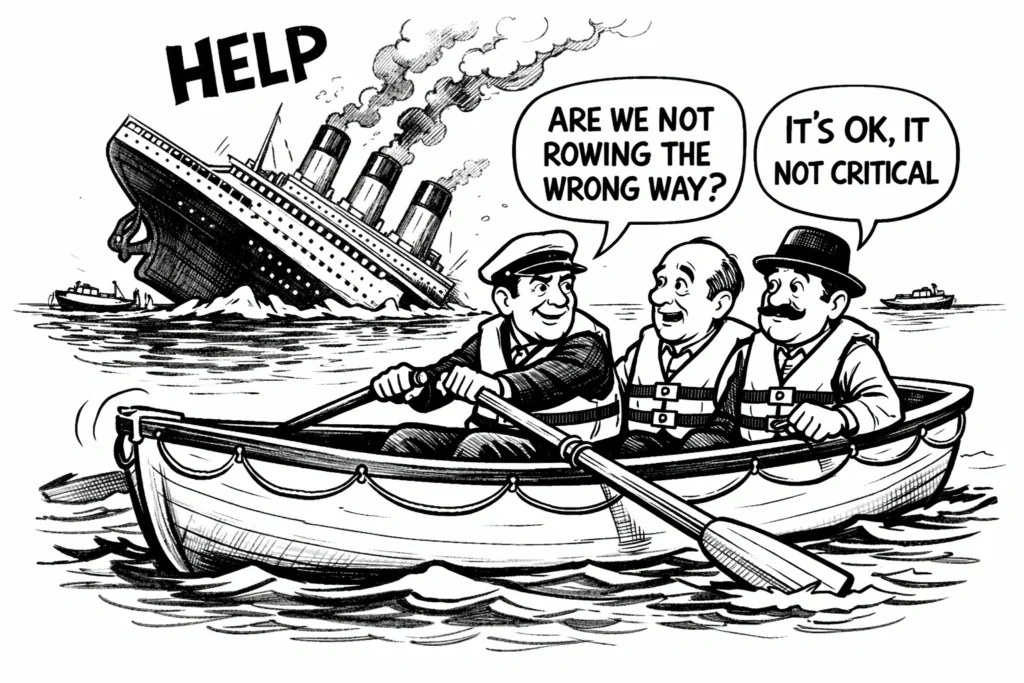
They may not be necessary doctrines for a person to understand before receiving salvation. Yet they may become critically important when a particular interpretation shapes the way a believer understands God, presents the gospel, approaches evangelism, or explains divine justice to an unbeliever. They may also become critical to the unbeliever who is told that God desires repentance while simultaneously withholding the grace without which repentance is impossible.
For these reasons, the doctrines of election and predestination deserve careful, honest, respectful, and biblically rigorous examination. They address questions central to the gospel: who is saved, why they are saved, how they are saved, and how God’s eternal purposes relate to humanity. Before evaluating the biblical evidence, however, it is essential that we first understand precisely what Calvinism teaches. Far too many discussions concerning election and predestination become confused because the participants use the same theological terms while assigning different meanings to them.
Consequently, before examining the biblical texts themselves, we must first define the principal doctrines that collectively form the Calvinistic understanding of salvation. These doctrines are most commonly summarized by the acronym T.U.L.I.P. Although the acronym itself did not originate with John Calvin, it has become the standard shorthand for the theological system that developed from the conclusions of the Synod of Dort. Understanding these doctrines will provide the necessary framework for everything that follows.
Defining “T.U.L.I.P.”
TULIP is an acronym that summarizes the five principal doctrines commonly associated with Calvinism:
- Total Depravity
- Unconditional Election
- Limited Atonement
- Irresistible Grace
- Perseverance of the Saints
The acronym itself was not coined by John Calvin. Rather, it emerged later as a convenient summary of the doctrinal conclusions associated with the Synod of Dort (1618–1619), which convened in response to the five Articles of Remonstrance presented by the followers of Jacobus Arminius. Although not all churches within the broader Reformed tradition explicitly use the acronym TULIP, many nevertheless affirm substantially the same Augustinian and Reformed doctrines as expressed in historic confessional documents such as the Westminster Confession of Faith. Consequently, throughout this article, references to Calvinism and the broader Reformed Tradition should be understood as encompassing theological systems that affirm these core doctrines, whether or not they are formally identified by the acronym TULIP.
Westminster Confession
Having identified the five doctrines commonly summarized by the acronym T.U.L.I.P., we must now examine the broader theological framework from which these doctrines arise. While the five points provide a convenient summary, they cannot be fully understood apart from the underlying doctrine of God’s eternal decree as articulated in the historic Reformed confessions. The Westminster Confession of Faith remains one of the clearest and most influential expressions of that theological framework, and it will therefore serve as an appropriate starting point for understanding the Calvinistic system on its own terms.
Click to open or close: Westminster Confession
Historical Context
The Westminster Confession of Faith was drafted by the Westminster Assembly during the English Civil War, aiming to provide a comprehensive statement of faith for the Church of England. It reflects the theological conflicts of its time, particularly the tensions between Calvinism and Arminianism. The Confession is considered a culmination of Reformed thought, particularly influenced by John Calvin’s teachings, and has been adopted by various Presbyterian and Reformed churches worldwide
WESTMINSTER CONFESSION SECTION 3: GOD’S ETERNAL DECREE
- “God from all eternity, did, by the most wise and holy counsel of His own will, freely, and unchangeably ordain whatsoever comes to pass: (Eph. 1:11, Rom. 11:33, Heb. 6:17, Rom. 9:15,18) yet so, as thereby neither is God the author of sin, (James 1:13,17, 1 John 1:5) nor is violence offered to the will of the creatures; nor is the liberty or contingency of second causes taken away, but rather established. (Acts 2:23, Matt. 17:12, Acts 4:27–28, John 19:11, Prov. 16:33)”.
- “Although God knows whatsoever may or can come to pass upon all supposed conditions, (Acts 15:18, 1 Sam. 23:11–12, Matt. 11:21, 23) yet hath He not decreed anything because He foresaw it as future, or as that which would come to pass upon such conditions. (Rom. 9:11, 13, 16, 18)”.
- “By the decree of God, for the manifestation of His glory, some men and angels (1 Tim. 5:21, Matt. 25:41) are predestinated unto everlasting life; and others foreordained to everlasting death. (Rom. 9:22–23, Eph. 1:5–6, Prov. 16:4)”.
- “These angels and men, thus predestinated, and foreordained, are particularly and unchangeably designed, and their number so certain and definite, that it cannot be either increased or diminished. (2 Tim. 2:19, John 13:18)”.
- “Those of mankind that are predestinated unto life, God, before the foundation of the world was laid, according to His eternal and immutable purpose, and the secret counsel and good pleasure of His will, hath chosen, in Christ, ß(REMEMBER THIS) unto everlasting glory, (Eph. 1:4, 9, 11, Rom. 8:30, 2 Tim. 1:9, 1 Thess. 5:9) out of His mere free grace and love, without any foresight of faith, or good works, or perseverance in either of them, or any other thing in the creature, as conditions, or causes moving Him thereunto: (Rom. 9:11, 13, 16, Eph. 1:4, 9) and all to the praise of His glorious grace. (Eph. 1:6, 12)”
- “As God hath appointed the elect unto glory, so hath He, by the eternal and most free purpose of His will, foreordained all the means thereunto. (1 Pet. 1:2, Eph. 1:4–5, Eph. 2:10, 2 Thess. 2:13) Wherefore, they who are elected, being fallen in Adam, are redeemed by Christ, (1 Thess. 5:9–10, 1 Tit. 2:14) are effectually called unto faith in Christ by His Spirit working in due season, are justified, adopted, sanctified, (Rom. 8:30, Eph. 1:5, 2 Thess. 2:13) and kept by His power, through faith, unto salvation. (1 Pet. 1:5) Neither are any other redeemed by Christ, effectually called, justified, adopted, sanctified, and saved, but the elect only. (John 17:9, Rom. 8:28, John 6:64–65, John 10:26, John 8:47, 1 John 2:19)”.
- “The rest of mankind God was pleased, according to the unsearchable counsel of His own will, whereby He extendeth or witholdeth mercy, as He pleaseth, for the glory of His sovereign power over His creatures, to pass by; and to ordain them to dishonour and wrath for their sin, to the praise of His glorious justice. (Matt. 11:25–26, Rom. 9:17–18, 21–22, 2 Tim. 2:19–20, Jude 4, 1 Pet. 2:8)”.
- “The doctrine of this high mystery of predestination is to be handled with special prudence and care, (Rom. 9:20, Rom. 11:33, Deut. 29:29) that men, attending the will of God revealed in His Word, and yielding obedience thereunto, may, from the certainty of their effectual vocation, be assured of their eternal election. (2 Pet. 1:10) So shall this doctrine afford matter of praise, reverence, and admiration of God; (Eph. 1:6, Rom. 11:33) and of humility, diligence, and abundant consolation to all that sincerely obey the Gospel. (Rom. 11:5, 6, 20, 2 Pet. 1:10, Rom. 8:33, Luke 10:20)”.
The Logical Implications of TULIP: A Case for Theistic Determinism
TULIP – like the Westminster Confession – teaches that “God from all eternity did, by the most wise and holy counsel of His own will, freely and unchangeably ordain whatsoever comes to pass.” This is commonly referred to as God’s eternal decree. By logical implication, if whatsoever comes to pass has been eternally and unchangeably ordained by God, then all things—down to their minutest detail—occur according to His decree and purpose.
The Language Implies Theistic Determinism
To understand why I posit the doctrines summarized by TULIP – and the Westminster Confessions – logically entail a form of theistic determinism, one need only consider the language of the Westminster Confession itself. It states: “God from all eternity did, by the most wise and holy counsel of His own will, freely, and unchangeably ordain whatsoever comes to pass.” It further states: “Although God knows whatsoever may or can come to pass upon all supposed conditions, yet hath He not decreed anything because He foresaw it as future, or as that which would come to pass upon such conditions.”
These statements indicate more than God’s passive permission or mere foreknowledge of future events. Rather, they describe a decree that determines what will occur independent of any foreseen conditions or contingent human responses. If God has not decreed events because He foresaw them, but instead foresaw them because He decreed them, then the decree itself becomes the ultimate explanation for why events unfold as they do. For this reason, I contend that the language naturally lends itself to a deterministic understanding of God’s relationship to history.
The Scope of the Divine Decree
Accordingly, TULIP – like the Westminster Confession – teaches that God has eternally ordained the entirety of history, including every attitude, belief, desire, decision, and action of men, angels, and demons, as well as their ultimate destinies. Before creation itself, God decreed all that would come to pass, and nothing can occur outside of or contrary to that decree. It is for this reason that I contend the doctrines summarized by TULIP logically entail a form of theistic determinism, in which every event ultimately unfolds according to God’s eternal and determining will.
The Westminster Qualification and the Logical Tension It Creates
At this point, however, the Westminster Confession also adds the qualification: “Yet so, as thereby neither is God the author of sin, nor is violence offered to the will of the creatures; nor is the liberty or contingency of second causes taken away, but rather established.”
This qualification creates a significant logical tension, not unlike that of a square circle. If God determines every human thought, desire, belief, and action—including those that are evil—it is difficult to see how He can simultaneously be excluded from meaningful authorship of what He has exhaustively determined. Simply distinguishing between God’s decree and the creature’s action does not by itself resolve the problem. If every thought, intention, and action of the creature occurs precisely because God unchangeably determined that it would occur, then saying that the creature is the author of the evil while God is not requires more than assertion; it requires an explanation of how those propositions can coherently stand together.
Nor is it sufficient simply to call the difficulty a “mystery.” There is an important difference between a mystery and a contradiction. A mystery may involve truths that Scripture reveals without explaining fully how they operate. A contradiction, however, occurs when two claims cannot both be true in the same sense at the same time. Appealing to mystery may acknowledge the limits of human understanding, but it cannot by itself demonstrate that apparently contradictory propositions are actually compatible.
This distinction is especially important when evaluating a theological system. If “it is a mystery” becomes an acceptable defense whenever a central doctrinal conclusion appears logically irreconcilable with another biblical truth, then the doctrine becomes increasingly difficult to test. The same defense could be used to protect virtually any theological proposition from examination: whenever an objection exposes an apparent contradiction, one could simply declare the relationship mysterious. That creates a dangerous methodological slippery slope. Mystery has a legitimate place where Scripture establishes both truths and leaves their precise relationship unexplained; it should not be used to establish, or insulate from examination, a theological inference that Scripture itself does not explicitly require.
Therefore, if God has freely and unchangeably – as the Westminster Confession states – ordained whatsoever comes to pass and has not decreed events on the basis of foreseen conditions, then it is difficult to see how the same decree can simultaneously avoid making God the ultimate determiner of sinful acts while also preserving genuine creaturely liberty and contingency.
The fact that the confession affirms both exhaustive ordination and meaningful contingency without adequately explaining how the two coexist, renders the statement incoherent. Neither John Calvin – the namesake of Calvinism – nor renowned Calvinist proponents like R. C. Sproul or John Piper are able to reconcile these self-contradicting statements and the concepts.
Click to open or close: John Calvin, RC Sproul & John Piper’s Inability to reconcile these statements.
In discussing God’s decree and the Fall, Calvin acknowledged that he could not explain how God ordains events without Himself becoming the author of sin, calling it a secret beyond human understanding: “But how it was ordained by the foreknowledge and decree of God what man’s future was without God being implicated as associate in the fault as the author or approver of transgression, is clearly a secret so much excelling the insight of the human mind, that I am not ashamed to confess ignorance.” — Concerning the Eternal Predestination of God
This is perhaps the clearest historical example of a Reformed theologian admitting that the reconciliation of God’s exhaustive decree with His not being the author of sin is, in his view, a mystery.
R. C. Sproul, frequently appealed to mystery when discussing God’s sovereignty and evil. He maintained that God ordains whatsoever comes to pass while denying that God is the author of sin, acknowledging that how these truths fit together is beyond complete human comprehension.
Likewise, John Piper has argued that God ordains all events, including sinful acts, for His wise purposes while insisting that God remains holy and not morally blameworthy for evil. Piper similarly acknowledges that the precise relationship between God’s sovereign decree and human culpability is ultimately mysterious.
Calvin’s own words are probably the strongest citation, because he explicitly admits ignorance on the very issue: How can God ordain the Fall by His decree without being implicated as the author or approver of sin? Calvin’s answer: “It is clearly a secret… I am not ashamed to confess ignorance.“
That the Westminster Confession’s assertion that God “ordains whatsoever comes to pass” sits in tension with its denial that God is the author of sin, this quotation provides direct evidence that even Calvin himself acknowledged the difficulty and treated the reconciliation as a mystery rather than offering a fully articulated explanation.
The Implications of Theistic Determinism for Calvinism
The Implications for the Doctrine of Salvation
Applied to the doctrine of salvation, this reasoning leads to the conclusion that, apart from any consideration of the unbeliever’s response, God has chosen certain individuals—His elect—for eternal salvation, while all others, often described within Reformed theology as the reprobate, are left in their fallen condition and, under the doctrine of Limited Atonement, are destined for eternal condemnation according to God’s eternal decree.
Total Depravity and Unconditional Election
Consequently, salvation is not conditioned upon anything the unbeliever does, including believing in Christ. Because mankind is held to be totally depraved, the unbeliever is understood to be incapable of believing the gospel or responding to God in faith through any autonomous exercise of the will unless God first sovereignly, effectually, and selectively regenerates that individual. This is termed Unconditional Election because election is understood to rest solely upon God’s sovereign choice and not upon any condition met by the sinner.
Irresistible Grace and the Perseverance of the Saints
Likewise, Irresistible Grace ensures that those whom God has chosen will infallibly come to saving faith, while the Perseverance of the Saints guarantees that they will ultimately persevere because God has determined that they will do so.
Reprobation, Double Predestination, and the Logical Conclusion
By this line of reasoning, the fact that salvation is not universal means that God’s unconditional election of some by irresistible grace necessarily involves a corresponding passing over of others. Although not represented by a separate letter in the acronym T.U.L.I.P., this concept is commonly referred to within Reformed theology as reprobation and, in some discussions, as double predestination. Therefore, I believe it is more than reasonable to conclude that these doctrines, taken together, logically follow from and reinforce a deterministic understanding of God’s eternal decree. After all, if God chooses—or predetermines—only some individuals for salvation, then it follows that those not chosen remain destined for eternal condemnation. However, this is where the broader Reformed tradition and Calvin himself are sometimes distinguished.
Many within the broader Reformed tradition teach that God does not actively choose individuals unto damnation, but instead passes them over, leaving them in their fallen condition while choosing others unto salvation. For all intents and purposes, however, this distinction appears largely semantic. Whether one says that the light is off or another says that the light is not on, the result is exactly the same. Likewise, whether one says that God chooses some unto salvation while passing over the rest, or that God positively chooses some unto salvation and others unto damnation, the practical outcome is identical: one group is eternally saved, while the other is eternally condemned according to God’s eternal decree.
John Calvin himself rejected the “passing over” distinction as insufficient. In opposing those who attempted to separate election from reprobation, he wrote: “This they do ignorantly and childishly, since there could be no election without its opposite reprobation.… Whom God passes by He reprobates, and that for no other cause but because He is pleased to exclude them from the inheritance which He predestines to His children”. It is difficult to disagree with Calvin’s logic on this particular point. If election is unconditional and God’s eternal decree comprehensively determines every historical event—including the eternal destiny of every individual—then the passing over of the non-elect is not merely a passive omission but an essential component of that same decree.
Indeed, this conclusion appears entirely consistent with the Westminster Confession’s broader assertion that God has “freely and unchangeably ordained whatsoever comes to pass”. If God has exhaustively decreed all things, including every attitude, desire, decision, action, and eternal destiny, then distinguishing between actively choosing some and merely passing over others seems to describe two different ways of expressing the same decretive reality rather than two substantively different doctrines.
Having outlined the theological framework of Calvinism and the logical implications of its understanding of God’s eternal decree, we are now in a position to examine the biblical doctrines of foreknowledge, predestination, and divine intention. Before examining how these doctrines relate to one another, however, it is first necessary to establish what Scripture means when it speaks of predestination. Unless the meaning of the biblical term is first established, there is a danger that the conclusions of a theological system will be read back into the word itself.
The Biblical Meaning of Predestination
The Greek word translated “predestined” is προορίζω (proorizō), identified in Strong’s Concordance as [G4309].
Original word: προορίζω (proorizō)
Strong’s definition: “To limit in advance; that is, figuratively, to predetermine; determine before, ordain, predestinate.”
Thayer’s definition: “To predetermine; to decide beforehand; in the New Testament, of God decreeing from eternity; to foreordain or appoint beforehand.”
While these definitions establish that something is determined or appointed in advance, they do not by themselves specify precisely what is being predetermined. That question must be answered by the immediate and broader context of Scripture. It is therefore important to recognize that predestination need not mean that every human choice has itself been predetermined. Rather, it can reasonably be understood to mean that God has predetermined the boundaries, conditions, purposes, or destinies associated with those choices.
In other words, God may sovereignly ordain the consequences and final outcomes without causally determining every intervening decision made by moral agents. This understanding is consistent with the repeated biblical pattern in which God places genuine alternatives before humanity and calls people to respond. Throughout Scripture, mankind is presented with a choice between life and death, blessing and curse, obedience and disobedience, and faith and unbelief.
Most fundamentally, the gospel presents the choice of accepting or rejecting Jesus Christ. God has predetermined the destiny attached to each response: those who trust in Christ receive eternal life, while those who reject Him remain under condemnation. This distinction between predetermining a response and predetermining the destiny attached to that response is essential. The former would mean that God causally determines what a person believes and does. The latter means that God sovereignly establishes where each response will lead.
With this distinction established, we can now examine how the Calvinistic understanding of foreknowledge and predestination differs from the relationship between these doctrines that I believe is more consistent with God’s eternal omniscience and the broader testimony of Scripture.
Foreknowledge, Predestination, and Divine Intention
Calvinism’s Teaching Concerning Foreknowledge and Predestination
Augustinianism, the Reformed tradition, Calvinism, T.U.L.I.P., and the Westminster Confession teach that God’s foreknowledge is the consequence of His predestining that which He creates. Thus, according to this system, the reason God foreknows who will and will not be saved is because He has first predestined, by His sovereign will, who will and who will not be saved. This, however, presents a significant theological and philosophical problem.
Click Calvinism's Limited View of Omniscience to see further evidences of this claim.
Augustinianism, the Reformed tradition, Calvinism, T.U.L.I.P., and the Westminster Confession not only infer that predestination is something God may choose either to exercise or not exercise, but they also appear to render God’s foreknowledge contingent upon His sovereign decree of predestination. See the Westminster Confession, “Of God’s Eternal Decree,” III.2.
In other words, foreknowledge becomes the consequence of predestination rather than predestination flowing from God’s eternal omniscience. This has profound implications. If God’s knowledge of future events depends upon His prior decree determining those events, then foreknowledge is no longer functioning solely as an essential attribute of God’s nature but as the logical result of His decretive will. God’s omniscience would therefore appear, at least conceptually, to derive its knowledge of future realities from His decree rather than from His intrinsic nature as the One who eternally knows all things.
Openness Theology
One helpful comparison may be made with Openness Theology, which teaches that God does not infallibly foreknow all future events because the future choices of free creatures do not yet exist to be known. While Augustinianism, the Reformed tradition, Calvinism, T.U.L.I.P., and the Westminster Confession reject this conclusion, they nevertheless appear to make God’s foreknowledge dependent upon His decree. In other words, God knows future events because He has first determined them. The practical difference, therefore, is not whether God foreknows the future but how He foreknows it.
Openness Theology limits God’s foreknowledge by denying exhaustive foreknowledge of future free actions. Calvinism preserves exhaustive foreknowledge but, in my understanding, does so by making foreknowledge the consequence of God’s exhaustive predetermination. In both systems, foreknowledge becomes dependent upon something other than God’s eternal omniscience: in Openness Theology, upon the future’s indeterminacy; in Calvinism, upon God’s prior decree.
For this reason, I believe neither system fully reflects the historic Christian understanding of omniscience, which holds that God eternally knows all things because omniscience is an essential attribute of His divine nature rather than the consequence of either an exhaustive decree or a limitation upon His knowledge.
The Historic Christian Understanding of Foreknowledge and Predestination
Historically, the Christian understanding of omniscience has been that God knows all things—actual and possible, created and uncreated, past, present, and future—not because He first determines every event, but because omniscience is an eternal and essential attribute of His being. God does not become all-knowing by willing events into existence. Rather, He knows all things because He is, by His very nature, omniscient. Consequently, making foreknowledge logically contingent upon predestination appears to reverse that relationship. It causes God’s decree to function as the explanation for His foreknowledge rather than His omniscience serving as the explanation for both His decree and His perfect knowledge of all reality.
A theological system may affirm that God eternally knows all things, but if it also insists that He knows future events only because He first decreed and determined them, then the decree has become the functional ground of His foreknowledge. The more coherent order, in my understanding, is that God eternally knows all possible and actual realities because He is omniscient. From within that exhaustive and eternal knowledge, He sovereignly chooses the reality He will create and the purposes He will accomplish within it. This brings us to the concept commonly described as Middle Knowledge.
Middle Knowledge
Middle Knowledge, commonly associated with Molinism, affirms that God, by virtue of His omniscience, possesses exhaustive knowledge of every possible reality and every possible course of human history. Before creation, God eternally knew every possible world that could be created together with everything that would occur within each of those possible realities. Consequently, nothing that takes place within creation ever surprises God, for He has eternally known every event, every circumstance, every human response, and every consequence.
My understanding agrees with this fundamental principle of God’s exhaustive foreknowledge but places particular emphasis upon God’s sovereign act of creation. I understand predestination to be the consequence of God’s sovereign decision to create a particular foreknown reality. In other words, God does not first create and then later decide what He will predestine. Rather, whatever reality God sovereignly chooses to actualize from among all the realities He eternally foreknows necessarily becomes the reality that is predestined to unfold according to the purposes and destinations He has eternally established.
Predestination is therefore not a separate act independent of creation, but the inevitable consequence of God’s sovereign decision to create that which He eternally foreknew. Accordingly, God’s sovereign decree encompasses not only the final destination of His redemptive plan but also the entire created order through which that plan unfolds. God creates the world, establishes its history, provides every moral opportunity, and ordains every means by which His purposes will be accomplished.
Every genuine moral possibility, every opportunity to obey or rebel, every capacity to hear, see, reason, believe, repent, or reject, and every provision for salvation exists because God sovereignly created and continually sustains them. These capacities are not autonomous properties possessed independently of God, but gifts of His creative design. Unlike Augustinianism, Reformed theology, Calvinism, or Openness Theology, this understanding maintains that God can sovereignly create a foreknown reality in which human beings exercise genuine moral agency through the very capacities that He Himself has created and sustained.
God neither relinquishes His sovereignty nor forfeits His omniscience by creating such a world. Rather, His sovereign wisdom is displayed in creating a reality in which His eternal purposes are accomplished without His needing to coerce every human response or determine every act of unbelief. Because God infallibly foreknows all that shall come to pass, He is never taken by surprise. Being omnisapient—that is, all-wise—He has eternally considered every contingency and has sovereignly ordered creation so that His purposes unfold precisely according to the means and methods He has chosen.
As the saying goes, one cannot lose at poker when one already knows every card held by every player. Figuratively speaking, God not only knows every card that mankind holds, but He also eternally knows how every person will play those cards. God does not need to force anyone’s hand in order to accomplish His purposes. It is therefore significant that Scripture speaks of those whom God foreknew before speaking of those whom He predestined, as in Romans 8:29.
While the order of these terms alone does not establish an entire theological system, it is nevertheless consistent with the understanding that God’s predestining purpose is inseparably connected with His eternal foreknowledge of the reality He sovereignly chose to create. Accordingly, God can sovereignly plan both creation and glorification without intending, causing, or determining anyone’s rejection of Him, even though He eternally foreknows every response that will occur within the reality He freely chose to create.
This naturally raises an important objection. If God eternally knew every possible reality and then sovereignly chose to create one particular reality, does His choice to create that reality mean that He predetermined every thought, belief, decision, and action occurring within it?
Does Foreknown Creation Necessarily Mean Predeterminism?
It is understandable how some might view predestination as predeterminism. After all, if God knows all possible realities and chooses to create one of them, is not everything that God foreknowingly created therefore predestined to happen exactly as He chose?
In answer to that question, imagine for a moment that God showed you three possible outcomes for your favorite hockey team in a game against an opponent. In one reality, they win; in another, they lose; and in the third, they tie. God then asks which outcome you would choose to become reality. Naturally, you would choose the scenario in which your team wins, and in that sense one could say that you chose and predestined the victory.
Yet choosing the reality in which the team wins does not mean that every move, action, pass, mistake, and decision made during the game was not freely made by the players themselves. You chose the reality in which the team won. You did not necessarily cause each movement by which the victory came about. Likewise, God’s sovereign choice to actualize a foreknown reality does not logically require that He causally determine every thought, desire, belief, and action occurring within that reality.
God may sovereignly choose to create a reality He eternally foreknows without His foreknowledge becoming the cause of every moral decision made within it. It is not coincidental that the term “predestined” in Scripture follows some variation of the term “foreknew,” and in each relevant salvific context, the word predestined speaks to the appointed destiny of those already identified in relation to Christ.
In other words, the context is not necessarily that individuals were predestined unto believing, but that those who are in Christ are predestined through salvation unto the inheritance, adoption, conformity, and glorification God has appointed for them. It is by His sovereign will that God has given mankind the choice—metaphorically speaking—of which bus to board, whether the bus destined for Heaven or the bus destined for Hell.
The fact that God created this reality while eternally foreknowing our decisions does not mean that every thought, belief, action, and decision within this reality was not genuinely and personally made by us. Foreknowledge describes God’s perfect knowledge of what will occur. It does not, by itself, establish that God causally determines every event He foreknows. This distinction can be further illustrated by considering the relationship between a parent’s intention, permission, foreknowledge, and the choices of a child.
The Parent and Teenager Analogy
A parent gives a teenager a car, knowing that driving is essential for growth, maturity, and future independence. The parent also knows, based upon experience and statistics, that the teenager will likely make mistakes.
- The parent’s intention is the teenager’s growth and development.
- The parent’s permission allows for the possibility of accidents.
- The parent’s foreknowledge does not cause the accidents.
Neither, by any stretch of the imagination, does the fact that the parent knowingly permitted the teenager to drive imply that the parent intended the accidents to occur. Likewise, God’s intention is human glorification. His permission allows for genuine moral freedom. His foreknowledge does not cause rejection, nor does it mean that God intended anyone to reject Him. This preserves God’s goodness, sovereignty, and desire for all to be saved while maintaining genuine human moral agency.
How Predestination Fits the Analogy
If one should ask how predestination fits into this analogy, I would answer that the biblical context of predestination speaks to God’s predetermining the resulting destiny or consequence associated with an action or response. For example, if the teenager makes the right decisions while driving, the teenager may be destined to receive greater trust, privilege, or reward. Conversely, if the teenager makes a wrong decision, the teenager may be destined to receive some form of penalty or loss of privilege.
The parents could be said to have created the opportunity for the teenager to make a wrong choice, but their intention would nevertheless be that the child make the right decision and receive the appointed reward. Regardless, it is the teenager’s own choice and action that becomes the basis upon which the parent applies the reward or penalty that had been established beforehand. The parent predetermines the consequences attached to each possible response. The parent does not necessarily predetermine the response itself.
Predestining Consequences Versus Predetermining Choices
Predetermining the resulting consequences of an action is fundamentally different from predetermining the choice and action itself. In the context of this analogy, the parents may establish in advance that responsible driving will lead to greater freedom and that reckless driving will lead to punishment. That does not mean the parents causally determine whether the teenager will drive responsibly or recklessly.
Likewise, God may sovereignly establish the consequences of faith and unbelief without causally determining whether an individual will believe or reject the truth presented to them. The concept that God must predetermine every human choice and action does not fit contextually, progressively, and intact throughout the whole testimony of Scripture. Scripture repeatedly presents God as commanding, warning, inviting, pleading, correcting, rewarding, and judging human beings according to responses that are treated as genuinely theirs.
The Analogy Summarized
The parent-and-teenager analogy illustrates several essential distinctions:
Foreknowledge: The parent knows that accidents and mistakes are possible and even likely.
Intention: The parent does not desire, plan, or intend the accidents.
Causation: The parent does not cause the accidents.
Permission: The parent allows the teenager to drive because driving is part of growth, maturity, and eventual independence.
Predestination: Responsible choices are destined to lead toward reward, while irresponsible choices are destined to lead toward penalty.
This maps closely to the theological categories of foreknowledge, divine intention, human agency, permission, and predestination. If God genuinely gives human beings the freedom and ability to act, then they can choose something other than what God desires. This is exactly what the analogy captures. The parent’s will is for safety, responsibility, and maturity, but the teenager’s choices can diverge from that will. The analogy therefore preserves God’s goodness, sovereignty, and desire for all to be saved while maintaining genuine human moral agency.
The real tension is not between foreknowledge and moral freedom, because those can coexist. The deeper tension is between God’s will of desire—what He wants—and God’s will of permission—what He allows for the sake of accomplishing His broader purposes. The same distinction can be illustrated in another way by considering the difference between predetermining a destination and predetermining which person will choose that destination.
Another Illustration of Predestination: The Two Buses
Another helpful analogy for understanding predestination is that of a transportation company offering passengers a choice between two buses.
One bus has been predestined to arrive at a destination called Heaven.
The other bus has been predestined to arrive at a destination called Hell.
The destinations of the buses have been fixed in advance by the company and cannot be altered by the passengers. In that sense, the destiny of each bus has been predetermined. What has not necessarily been predetermined, however, is which bus any given passenger chooses to board. The company establishes the destinations. The rider chooses which destination to embrace by choosing which bus to enter.
This distinction may also help us understand Proverbs 16:9: “A man’s heart deviseth his way: but the LORD directeth his steps”. A person’s heart plans a course, indicating genuine volition, intention, and action. Yet the Lord establishes the paths, boundaries, conditions, and destinations through which those choices proceed. The person does not create the roads or determine where they ultimately lead. God does. Yet the person genuinely chooses which available course to follow.
In the same way, Scripture presents two final and predetermined destinies. God has ordained eternal life for those who are in Christ and eternal condemnation for those who reject Him. The destinies themselves are fixed because God has decreed them. Yet the repeated biblical invitations to repent, believe, come to Christ, and receive eternal life presume that individuals possess a genuine responsibility—and a corresponding response-ability—to respond to God’s gracious offer.
By contrast, if one were to argue that God not only predetermined the destinations but also predetermined which passengers would board each bus, then the passengers’ choices would become merely the inevitable outworking of a prior decree. In practical terms, the distinction between choosing a destination and being caused to choose it would disappear. Thus, in my understanding, the biblical doctrine of predestination is better understood as God’s sovereign determination of the destiny attached to a response rather than the exhaustive predetermination of the response itself.
The destinations are fixed; the call to choose between them is genuine. As Moses declared to Israel: “I have set before you life and death, blessing and curse. Therefore choose life” Deuteronomy 30:19. Likewise, the gospel sets before every hearer the predetermined consequences of faith and unbelief: eternal life in Christ or eternal separation from Him. There is no third destination. Accordingly, I understand biblical predestination primarily as God’s sovereign determination of the resulting destiny of a given response rather than the exhaustive predetermination of the response itself. God predestines the inheritance of those who are in Christ and the judgment of those who remain outside of Him. In this sense, the outcome is fixed because God has ordained it, while the individual remains genuinely responsible and accountable for his or her response to the revelation and grace that God has provided.
Such an understanding preserves both God’s absolute sovereignty and humanity’s meaningful moral agency. God remains the One who establishes the end from the beginning and who ordains the consequences of belief and unbelief, righteousness and unrighteousness, obedience and rebellion. At the same time, the biblical calls to repent, believe, choose life, and receive Christ retain their ordinary and practical significance, for they are addressed to persons who possess the God-given responsibility and response-ability to act upon the revelation set before them. The company determines where the buses go. The passengers do not determine or alter the final destinations. Nevertheless, the invitation to board the bus leading to life remains genuine, and the responsibility to respond remains with the person to whom the invitation has been given.