
SELECTED ARTICLE
The Trinity
Estimated time to read:
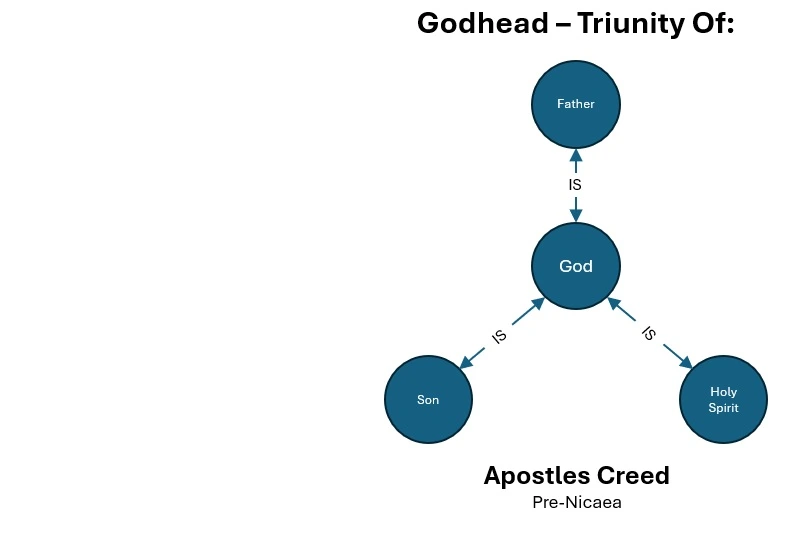
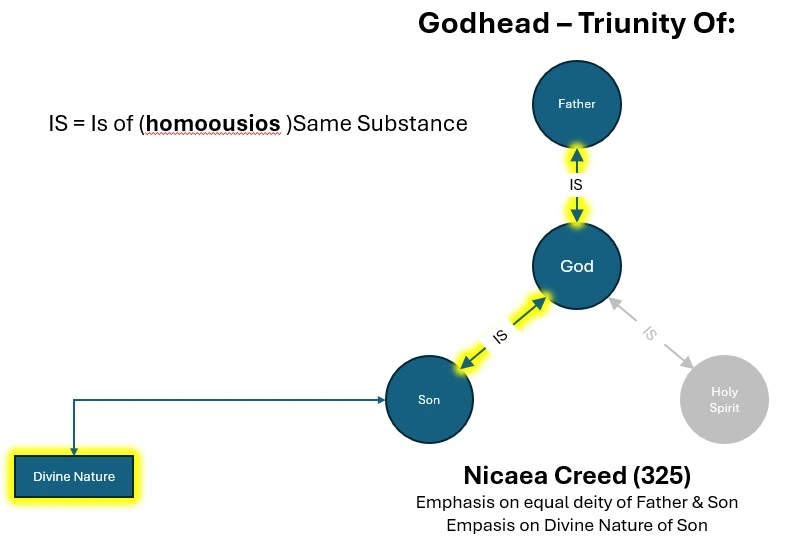
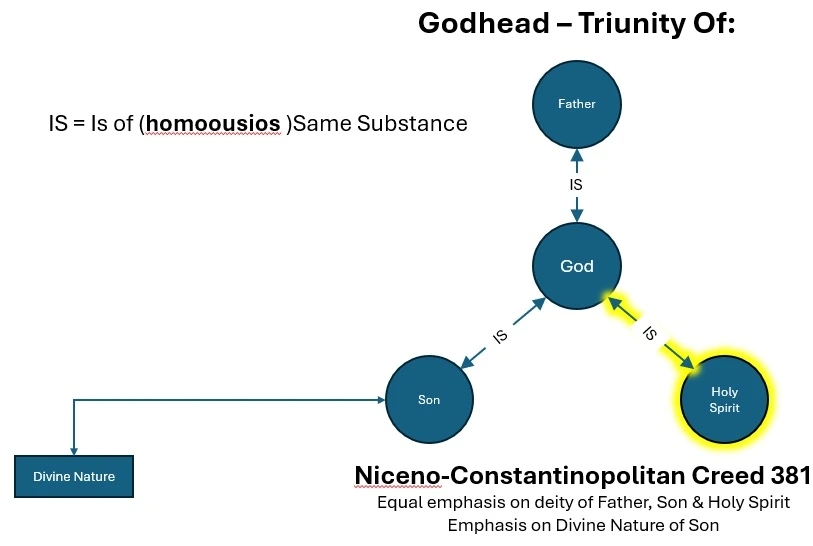
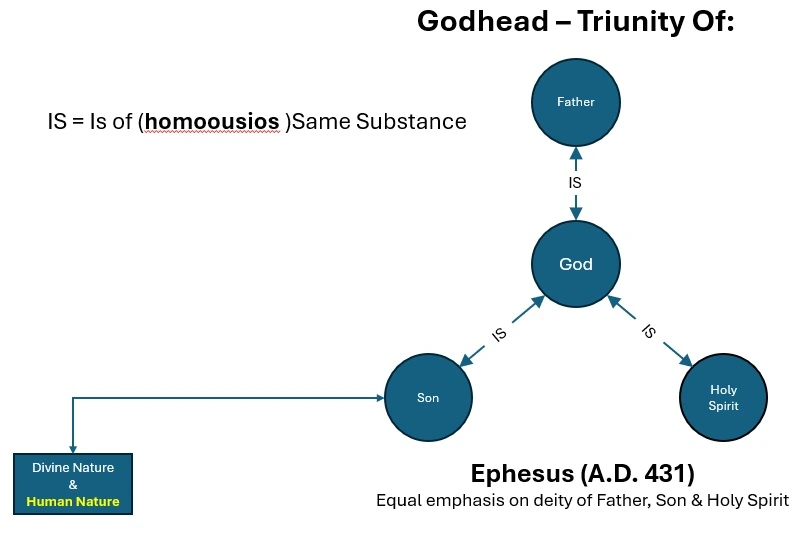
**** Moving your mouse over the image above will pause it. Click on any dot to move to the next or previous image. ****
THE DOCTRINE DEFINED
What the Trinity Affirms
The doctrine of the Trinity teaches that there is one God who eternally exists as three distinct persons: the Father, the Son, and the Holy Spirit. Stated another way, God is one in essence while eternally existing in three personal distinctions.
What the Trinity Does Not Teach
It is important to clarify what the doctrine does and does not teach. It does not teach that the Father, the Son, and the Holy Spirit are three separate gods or three parts that together make up God. Rather, each is fully and wholly God, sharing the one undivided divine essence. Nor does the doctrine teach that God is one person who merely reveals Himself in three successive roles or manifestations. Such views have historically been rejected by the Church.
Many who profess struggle to articulate it
To many, this doctrine appears contradictory or even logically impossible, as though it were claiming that God is simultaneously one and three in exactly the same sense. Historic Christianity, however, has understood the Trinity not as a contradiction but as a profound mystery—a truth that transcends complete human comprehension while remaining internally coherent when its terms are properly understood. Unfortunately, those terms are often misunderstood or left undefined, causing many who profess the Trinity to struggle to articulate the doctrine as the historic Church intended.
Mystery Has Its Place, But Not in Doctrines
It is one thing to both acknowledge and profess that the nature of God ultimately surpasses human comprehension and that there are mysteries—truths God has not revealed and things we simply do not know. It is altogether different, however, to expect one to acknowledge and profess a doctrine built upon what is unknown and cannot be verified by Scripture or sound reasoning. Sound doctrine must arise from what God has revealed, not from speculation or from attempting to fill the gaps of what He has chosen to withhold.
Mystery has its place and while we may rightly acknowledge mystery where Scripture is silent, we should never allow mystery to become the foundation of theological certainty or be used to shield our doctrines from biblical examination or logical scrutiny. Therefore, I do not believe that merely labeling something a “mystery” should bind one to accept it as truth nor should it absolve us of the responsibility to reason carefully from Scripture, to test our conclusions against the whole counsel of God, and to communicate biblical truth as clearly and faithfully as possible.
We should know what we confess, understand why we confess it, and be prepared to defend it from the Scriptures with clarity, humility, and conviction (1 Peter 3:15, 2 Timothy 1:13–14).
The Triunity of God is Not a Mystery
Nowhere in the Bible will you find the word Trinity, nor will you find a single verse that explicitly states, “God is three persons in one.” Nevertheless, this does not mean the doctrine is unbiblical. Rather, it demonstrates the principle of progressive revelation, whereby God gradually revealed the fullness of His nature throughout the course of redemptive history. Just as the doctrine of the Trinity is not built upon one isolated verse but upon the cumulative testimony of all Scripture, so too the triune nature of God is progressively manifested from Genesis to Revelation.
This is an important distinction because the Trinity itself is not presented in Scripture as a mystery in the sense of being hidden or unknowable. Likewise, the truth that there is only one God is not a mystery. Neither is the fact that the Father is God, the Son is God, and the Holy Spirit is God, while each remains distinct from the others. Although these truths are not gathered together into a single proof text, they are repeatedly and consistently revealed throughout the whole of Scripture. They are not obscure doctrines discovered through philosophical speculation but revealed truths that emerge naturally from God’s progressive self-disclosure.
The Triunity of God is Not Scripturally Obscure
The Old Testament consistently proclaims that there is but one true God (Deuteronomy 6:4; Isaiah 45:5–6), thereby establishing the unshakable foundation of biblical monotheism. Yet within that same revelation are glimpses of plurality within the Godhead. God speaks using plural expressions such as, “Let Us make man in Our image” (Genesis 1:26), the Angel of the LORD both represents God and speaks as God (Exodus 3:2–6), and the Spirit of God is distinguished from God while fully sharing in His divine work (Genesis 1:2; Isaiah 63:10).
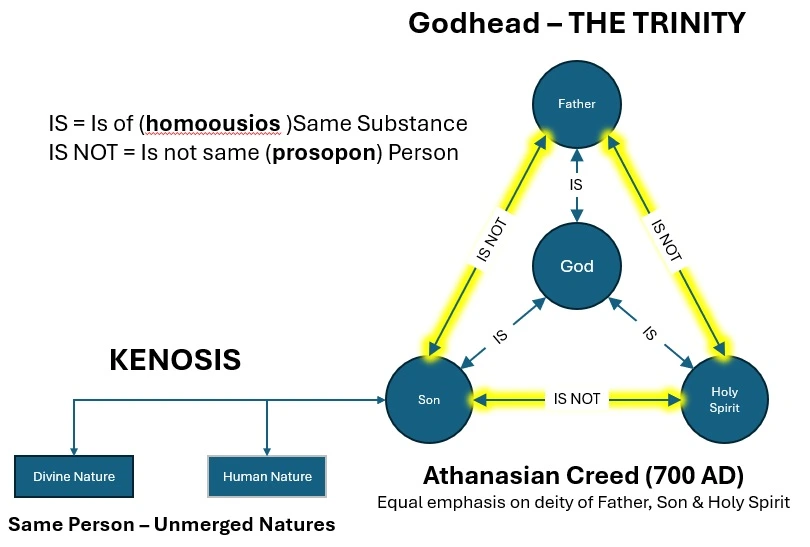
The New Testament brings these truths into much clearer focus. The Father is revealed as God (John 6:27), the Son is revealed as God (John 1:1; John 20:28; Colossians 2:9), and the Holy Spirit is likewise revealed as God (Acts 5:3–4; 2 Corinthians 3:17). At the same time, the Father is not the Son, the Son is not the Holy Spirit, and the Holy Spirit is not the Father. At Jesus’ baptism, the Son stands in the Jordan River, the Holy Spirit descends like a dove, and the Father’s voice speaks from heaven (Matthew 3:16–17). Likewise, Jesus commands His disciples to baptize “in the name”—singular—”of the Father and of the Son and of the Holy Spirit” (Matthew 28:19), revealing both the unity of God and the eternal distinction of the Father, the Son, and the Holy Spirit.
The Trinity Doctrine Explains ONLY What God is Three of
The historic doctrine of the Trinity was developed to answer the question, “What is God three of?” The Church’s answer was that God is three Persons sharing one divine essence. Yet it is important to recognize that the word person is itself an imperfect human term used to describe the perfect and infinite God. Like every human word applied to God’s nature, it cannot fully express the perfection of His being or exhaustively describe His triune existence. Consequently, the limitations of the word itself have often contributed to misunderstanding and confusion, especially as its meaning has evolved over the centuries.
Nevertheless, as Augustine wisely observed, the Church adopted the word not because it perfectly explained God’s nature, but because, when asked “Three what?”, something had to be said. In that sense, person remains the closest theological expression available for describing what God is three of, even while acknowledging that no finite word can fully capture the infinite reality of God’s nature.
Its Purpose is to Serve As a Guardrail
It was never intended to explain how God exists in this manner, but rather to provide faithful theological language that summarizes what Scripture reveals. In that sense, the doctrine of the Trinity serves an important and necessary purpose. It identifies and safeguards the biblical categories revealed throughout Scripture without claiming to exhaustively explain the infinite nature of God.
Omnipresence Offers a Scriptural Framework For How God is Three Of
The question of how these revealed truths coexist without contradiction is a different question altogether. Here, I believe Scripture itself provides a helpful conceptual framework through another revealed attribute of God—His omnipresence. God is spirit (John 4:24) and is not bound by the dimensions of space, time, or physical existence that govern His creation. His omnipresence is not a mystery but a clearly revealed attribute of His nature.
God is wholly present everywhere at once without being divided, diminished, or confined by spatial limitations (Psalm 139:7–10; Jeremiah 23:23–24). If God is not constrained by the dimensions He created, then we should not impose those limitations upon our understanding of His existence. Just as God can be wholly and simultaneously present everywhere without becoming many gods, so it is neither irrational nor contradictory that the one omnipresent God eternally exists as the Father, the Son, and the Holy Spirit while remaining one indivisible God.
I do not present God’s omnipresence as a replacement for the doctrine of the Trinity, but as a complementary conceptual framework that helps answer a different question. The doctrine of the Trinity tells us what God is three of; God’s omnipresence helps us understand how such a reality is coherent without imposing the limitations of created space and time upon the Creator.
Therefore, the doctrine of the Trinity is not the result of speculation or ecclesiastical invention. It is the Church’s theological summary of the whole counsel of God concerning His self-revelation. The word Trinity may not appear in Scripture, but the truth it seeks to express most certainly does. Like many theological terms, it serves as a concise label for a doctrine that arises from the progressive and harmonious testimony of God’s Word.
THE HISTORICAL FORMULATION
Doctrines do not just suddenly appear, nor are they formulated in a vacuum. In much the same way that our grade school mathematics teachers required us to show our work and write out the formulas by which we arrived at a conclusion, so too should theological interpretations and doctrinal conclusions be traceable, explainable, and open to examination. A conclusion, no matter how confidently asserted, is of little value if the reasoning by which it was reached cannot be followed, tested, and verified. Sound doctrine should not rest upon mystery or unexplained assertions or appeals to tradition alone but should demonstrate, step by step, how it is derived from the whole counsel of Scripture. Only then can others meaningfully examine the reasoning, identify any errors or assumptions, and determine whether the conclusion faithfully reflects God’s Word.
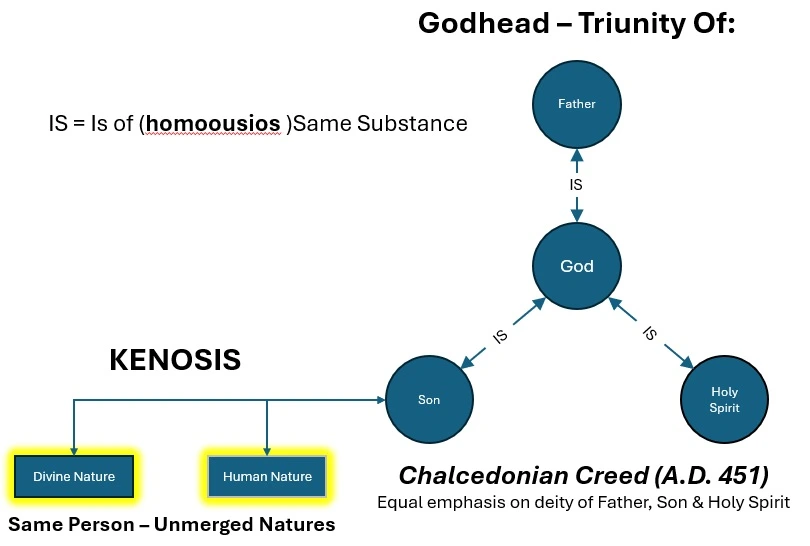
By no fault of their own, many Christians assume that the doctrine of the Trinity was formally established at the Council of Nicaea in A.D. 325. In reality, the development of Trinitarian language occurred over several centuries. The Council of Nicaea was convened primarily to address disputes concerning the deity of Jesus Christ, particularly the teachings of Arius, and to affirm that the Son is fully divine. In essence, the Trinity Doctrine is rooted in the doctrine of Kenosis, the two – Divine & Human – natures of Christ.
While these may seem like a small and insignificant details, sloppy and or inaccurate communication of such details typically lead to sloppy arguments for and in defense of the Trinity doctrine. Understanding the what, when, who, how, where and why of the Trinity Doctrine and the development of its language will bring better understanding of Trinity itself and better equip the believer to profess it, confess it and defend it.
The Development of Trinitarian Language
The language and formulations commonly associated with the doctrine of the Trinity continued to develop through subsequent theological reflection and ecumenical councils. Later summaries, including what is now known as the Athanasian Creed, articulated with greater precision the distinctions between the Father, the Son, and the Holy Spirit while maintaining the unity of the Godhead.
Click to open or close: First Council of Nicaea (A.D. 325) <—-> Athanasian Creed (A.D. 700)
FIRST COUNCIL OF NICAEA (A.D. 325)
The Rise of the Arian Controversy
The First Council of Nicaea met in A.D. 325 in response to the teachings of Arius, a presbyter from Alexandria. Like Origen before him, Arius believed that the Father is greater than the Son, who in turn is greater than the Holy Spirit. Unlike Origen, however, Arius did not believe it possible to have a hierarchy of divine beings. He brought a more radical form of monotheism to Origen’s system and concluded that the Father alone is truly God.
According to Arius, the Son was the One through whom the Father created the universe, yet He was Himself a creature, created ex nihilo (out of nothing). As a creature, the Son was not eternal but had a beginning. As Arius famously declared, “There was when He was not.” Arius further argued that because the Son was begotten, He necessarily came after the Father and, although exalted above every other creature, remained finite and subordinate to the Father.
The Arians appealed to passages such as John 14:28, “The Father is greater than I,“ and Colossians 1:15, “…the firstborn of all creation.“ A similar understanding of Christ’s nature is found today in the teachings of Jehovah’s Witnesses, although their theology is not identical in every respect to that of Arius.
Arius was strongly opposed by his bishop, Alexander of Alexandria, who maintained that the Son was eternally begotten of the Father and therefore fully and truly God. Alexander was supported by his young deacon, Athanasius, while Arius gained the support of several influential eastern bishops, including Eusebius of Nicomedia and others influenced by aspects of Origen’s theological tradition. The controversy rapidly spread throughout the Eastern Church and soon threatened the unity of the Empire itself.
Constantine’s Intervention
When Constantine became sole emperor of both the Eastern and Western Roman Empires in A.D. 324, he found himself forced to intervene. Many refer to Constantine as the first Christian Roman Emperor. While he increasingly favored Christianity following his reported conversion after the Battle of the Milvian Bridge in A.D. 312, historians continue to debate both the sincerity and maturity of his Christian faith. His continued use of Sol Invictus imagery, his delayed baptism until shortly before his death, and aspects of his political and personal conduct—including the executions of his son Crispus and later his wife Fausta—have led many historians to conclude that his religious convictions remained complex and, at times, inconsistent.
Constantine was not a trained theologian, nor does the historical evidence suggest that the theological intricacies surrounding Christ’s deity were his primary concern. Rather, his motives for convening the council appear to have been largely political. He wisely understood that the growing divide within the visible Church threatened its unity, which in turn threatened the stability of an already vulnerable Empire. Consequently, in an effort to restore peace and preserve imperial unity, Constantine convened the Council of Nicaea, which met in June A.D. 325, presiding over it in a political and ceremonial capacity while allowing the bishops themselves to conduct the theological debates.
Some historians have also suggested that Constantine’s favorable disposition toward Christianity may have been influenced, in part, by his increasingly negative attitude toward Judaism. In several of his later writings he referred to the Jews as “the detestable Jewish crowd“ and condemned “the customs of these most wicked,“ reflecting an unfortunate anti-Jewish sentiment that became increasingly common during portions of the fourth century.
The Purpose of the Council
Although the Council of Nicaea is often associated with the doctrine of the Trinity, its primary purpose was not to formulate a complete doctrine of the Trinity but to resolve the controversy surrounding the nature and deity of Jesus Christ. The council sought to establish harmony through a unified confession concerning the Son’s relationship to the Father and to reject the teachings of Arius.
More than three hundred bishops, accompanied by priests, deacons, theologians, philosophers, and imperial officials, attended the council, the vast majority coming from the Eastern provinces of the Empire. While many subjects were discussed, the central question remained remarkably simple: Was the Son created, or was He eternally begotten? Followers of Arius regarded these concepts as essentially equivalent. Alexander and Athanasius insisted they were fundamentally different.
The Challenge of Language
It is also important to understand that many of the theological terms employed during the debates were still developing in meaning. Greek words such as ousia (essence), hypostasis (substance), physis (nature), and prosopon (person) carried a variety of meanings inherited from earlier Greek philosophy, often leading to misunderstanding between Greek and Latin speakers.
Likewise, the distinction between homoousios (“of the same substance”) and homoiousios (“of similar substance”) would become one of the defining issues of the decades following Nicaea. Although differing by only a single Greek letter, the two words represented profoundly different understandings of Christ’s relationship to the Father. The term homoousios was initially viewed with caution by some bishops because of its earlier association with certain Gnostic writings and controversies addressed by the Synods of Antioch (A.D. 264–268). Nevertheless, the council ultimately adopted the term because it most accurately expressed the biblical conviction that the Son fully shares the Father’s divine nature.
Alexander and Athanasius Respond
Alexander and Athanasius argued that begetting belongs eternally to the very nature of the Father. If the Father has eternally existed as Father, then the Son has likewise eternally existed as Son. Thus, Father and Son have always existed together—coeternal, coequal, and consubstantial. The Logos was eternally begotten, not created, and therefore had no beginning. To deny this, they argued, would destroy the unity of the Godhead and make the Son something less than fully God.
Appealing to passages such as John 10:30, “I and the Father are one,” and John 1:1, “The Word was God,” Athanasius became the council’s greatest defender of Christ’s full deity. He argued that the Son must be of the same divine substance (homoousios) as the Father because salvation itself requires it. As Athanasius famously reasoned, “No creature can save a creature.” Only God can save because sin is ultimately an offense against God Himself. The grace revealed through Jesus Christ is therefore the very grace of God, and Christ can fully reveal the Father because He Himself is fully God.
Although Athanasius is rightly remembered as one of the greatest defenders of Nicene Trinitarian theology, others point even earlier to Tertullian of Carthage, who around A.D. 200 became the earliest known Christian writer to use the Latin word Trinitas, from which our English word Trinity is derived.
With Constantine’s support, all but two of the bishops signed the council’s confession, overwhelmingly rejecting Arianism. The resulting statement became known as the Nicene Creed (A.D. 325). It is important not to confuse this original creed with the later Niceno-Constantinopolitan Creed (A.D. 381), which expanded the earlier confession by more fully defining the deity and personhood of the Holy Spirit.
The Nicene Creed (A.D. 325)
We believe in one God, the Father almighty,
maker of all things visible and invisible.
And in one Lord, Jesus Christ, the Son of God,
begotten from the Father, only-begotten,
that is, from the substance of the Father,
God from God, light from light,
true God from true God, begotten not made,
of one substance with the Father,
through Whom all things came into being,
things in heaven and things on earth,
Who because of us men and because of our salvation came down,
and became incarnate and became man, and suffered,
and rose again on the third day, and ascended to the heavens,
and will come to judge the living and dead,
And in the Holy Spirit.
But as for those who say, there was when He was not,
and, before being born He was not,
and that He came into existence out of nothing,
or who assert that the Son of God is of a different hypostasis or substance,
or created, or is subject to alteration or change
– these the Catholic and apostolic Church anathematizes.
The Council of Nicaea (325) intended its creed to serve as the Church’s authoritative confession against Arianism, and the bishops expected it to remain unchanged. However, they did not explicitly declare at Nicaea that the creed itself could never be expanded or amended. That prohibition became more explicit later, particularly at the First Council of Ephesus (A.D. 431), which forbade the composition of another creed to replace the Nicene faith.
The Council of Constantinople (381) did not view itself as replacing the Nicene Creed but as expanding and clarifying it—especially concerning the Holy Spirit—in response to continuing controversies. The resulting creed became known as the Niceno-Constantinopolitan Creed.
THE AFTERMATH OF NICAEA
The Council of Nicaea, often referred to as the first of the ecumenical councils, did not meet with universal acceptance in its own time. Far from ending the debate concerning the deity of Christ, Nicaea actually inaugurated decades of further controversy.
One significant reason was the council’s adoption of the word homoousios (“of the same substance”). Emperor Constantine strongly advocated for its inclusion in the creed because it was already familiar and acceptable in the Western Church, where Tertullian had earlier described the Trinity as three persons sharing one substance. The term was also generally acceptable to the Antiochene theologians, who strongly emphasized the unity of the Godhead, though they were often less precise in explaining the eternal distinctions between the Father, the Son, and the Holy Spirit.
The situation was very different in the East. Many of the Eastern bishops, particularly those influenced by Origen’s theology, including Eusebius of Nicomedia, viewed the term homoousios with considerable suspicion. They feared that it could be interpreted in one of two undesirable ways. First, it might suggest a materialistic division of the divine substance into three parts. Second, it might open the door to Monarchianism, blurring the eternal distinctions between the Father, the Son, and the Holy Spirit by collapsing them into a single person.
Although many of these bishops ultimately accepted the term and signed the Nicene Creed, they did so more out of political and ecclesiastical necessity than theological conviction. Their signatures did not signify that they had been persuaded by the Nicene arguments. Consequently, the Council of Nicaea did not truly unify the Church. Instead, it effectively divided the Church into two major theological parties whose conflict would continue for more than half a century. Although traditionally called the “Arian Controversy”, the conflict was actually now between the Nicenes and the Origenists.
until the Council of Constantinople in A.D. 381 more fully clarified and expanded the Church’s Trinitarian confession.
RISE OF EXTREME ARIANISM (350 AD)
Although Constantine had banished Arius to Illyricum for refusing to sign the creed, the controversy was far from over. Many bishops returned to their churches continuing to teach as they had before. Arius himself eventually regained imperial favor, while Athanasius spent much of his ministry defending the Nicene faith and was exiled five separate times because of the continuing political and theological struggle.
During the 350s, an extreme Arian party, later known as the Anomoeans, arose, maintaining that the Son was totally unlike the Father in essence. This extreme position shocked many of the Eastern bishops who had previously been sympathetic to Arius and prompted them to seek greater theological clarity concerning the nature of Jesus Christ.
Athanasius, together with other defenders of the Nicene faith, responded with conciliatory gestures that helped bridge the divide between the Nicene and many of the moderate Eastern bishops. Rather than abandoning either position, a theological formulation gradually emerged that incorporated the legitimate concerns of both traditions. The eternal distinction of the three hypostases—the Father, the Son, and the Holy Spirit—emphasized by Origen and the Eastern theologians, was united with the Nicene affirmation that the three share one divine ousia or homoousios (“substance” or “essence”).
This mediating position was further developed by the Cappadocian Fathers—Basil the Great, Gregory of Nazianzus, and Gregory of Nyssa—whose theological precision helped secure its widespread acceptance. Their work laid the foundation for the Council of Constantinople in A.D. 381, where the Church formally reaffirmed the deity of the Son and more fully defined the deity and personhood of the Holy Spirit, completing what has become known as the Niceno-Constantinopolitan Creed.
THE COUNCIL OF CONSTANTINOPLE (A.D. 381)
In A.D. 381, approximately forty-four years after Constantine’s death, Emperor Theodosius I convened the Council of Constantinople to address the continuing theological disputes surrounding the Trinity and, in particular, the deity and personhood of the Holy Spirit.
The council was initially presided over by Gregory of Nazianzus. However, following considerable political opposition, Gregory resigned. Leadership subsequently passed to Nectarius, who, although not yet baptized and possessing little formal theological training, was elected Bishop of Constantinople and successfully guided the council to its conclusion.
Building upon the theological foundation established at Nicaea, the council clarified and expanded the Church’s confession concerning the Holy Spirit, affirming that He is fully divine and worthy of the same worship and glory as the Father and the Son.
The resulting confession became known as the Niceno-Constantinopolitan Creed, which remains one of the defining creeds of historic Christianity.
The Niceno-Constantinopolitan Creed (A.D. 381)
We believe in one God, the Father Almighty,
Maker of heaven and earth,
and of all things visible and invisible.
And in one Lord Jesus Christ,
the only-begotten Son of God,
begotten of the Father before all worlds,
Light of Light,
very God of very God,
begotten, not made,
being of one substance with the Father;
by whom all things were made.
Who for us men and for our salvation
came down from heaven,
and was incarnate by the Holy Spirit of the Virgin Mary,
and was made man;
and was crucified also for us under Pontius Pilate;
He suffered and was buried;
and the third day He rose again,
according to the Scriptures;
and ascended into heaven,
and sitteth on the right hand of the Father;
and He shall come again with glory
to judge both the living and the dead;
whose kingdom shall have no end.
And in the Holy Spirit,
the Lord and Giver of life,
who proceedeth from the Father;
who with the Father and the Son together
is worshipped and glorified;
who spake by the prophets.
And we believe one holy catholic and apostolic Church.
We acknowledge one baptism
for the remission of sins.
And we look for the resurrection of the dead,
and the life of the world to come.
Amen.
This is the original 381 form of the creed. Many Western churches today recite a slightly different version that includes the Latin phrase Filioque (“and the Son”) in the clause “who proceedeth from the Father and the Son.” That phrase was not part of the creed adopted at Constantinople in 381; it was added centuries later in the Western Church and became one of the principal theological issues contributing to the East–West Schism between Eastern and Western Christianity.
UNANSWERED QUESTIONS REGARDING CHRIST’S NATURE
Although the Council of Constantinople (A.D. 381) had reaffirmed the deity of the Son and formally recognized the full deity and personhood of the Holy Spirit, thereby completing the Church’s classic doctrine of the Trinity, it did not answer every question concerning the person of Jesus Christ. While the Church had now confessed that Christ is truly God, it had yet to fully explain how His divine and human natures were united in the incarnation. Over the next fifty years, this question would become the central theological controversy confronting the Church and would ultimately lead to the First Council of Ephesus in A.D. 431.
FIRST COUNCIL OF EPHESUS (A.D. 431)
Although the Council of Nicaea (A.D. 325) had firmly established the full deity of Jesus Christ by affirming that the Son is of one substance (homoousios) with the Father, and the Council of Constantinople (A.D. 381) had reaffirmed that confession while recognizing the full deity and personhood of the Holy Spirit, significant questions still remained concerning the incarnation. If Jesus Christ is truly God and truly man, then how are His divine and human natures united? Is He one person or two? How should the Church understand the relationship between His deity and His humanity?
These questions came to the forefront through the teaching of Nestorius, who became Patriarch of Constantinople in A.D. 428. Nestorius was deeply concerned with preserving the distinction between Christ’s divine and human natures. He feared that emphasizing their unity too strongly would confuse or mix the two natures, thereby compromising either Christ’s true humanity or His true deity.
The controversy centered upon the title Theotokos, meaning “God-bearer” or “Mother of God,” which had long been used by many Christians to describe the Virgin Mary. Nestorius objected to this title, arguing that Mary did not give birth to the divine nature of Christ but only to His humanity. He therefore preferred the title Christotokos, meaning “Mother of Christ.”
While Nestorius sought to protect the transcendence and immutability of God, many believed his teaching unintentionally divided Christ into two distinct persons—one divine and one human—united only by a close moral or cooperative relationship. If this were true, then the One who suffered upon the cross would not truly be God incarnate but merely a man uniquely associated with God.
Nestorius’ principal opponent was Cyril of Alexandria, one of the most influential theologians of the fifth century. Cyril argued that Scripture presents Jesus Christ as one divine Person who assumed a complete human nature. The eternal Son of God did not merely dwell within a human being or unite Himself to an already existing person; rather, “the Word became flesh” (John 1:14). Therefore, the one born of Mary was none other than the eternal Son Himself clothed in genuine humanity.
For Cyril, the title Theotokos was not primarily a statement about Mary but a confession concerning the identity of Jesus Christ. It did not mean that Mary was the source or origin of Christ’s divine nature, nor that she somehow existed before God. Instead, it affirmed that the child she conceived and bore was truly God the Son incarnate. To deny the title, Cyril believed, was to divide Christ into two persons and undermine the reality of the incarnation itself.
The controversy quickly spread throughout the Empire, dividing bishops, theologians, and entire regions of the Church. Hoping to restore unity, Emperor Theodosius II convened the First Council of Ephesus in A.D. 431.
The council itself was marked by political rivalry and considerable disorder. Bishops arrived at different times, accusations were exchanged between opposing factions, and separate assemblies were even held before all delegates had arrived. Cyril opened the council before the bishops supporting Nestorius reached Ephesus, and after lengthy deliberation the council condemned Nestorius and deposed him from his office. When the Antiochene bishops finally arrived, they convened their own council and, in turn, attempted to depose Cyril. For a time, both sides claimed legitimacy, illustrating how deeply divided the Church had become.
Eventually, Emperor Theodosius II accepted the decisions of the council led by Cyril, although reconciliation between the Alexandrian and Antiochene parties required several more years of negotiation. Nestorius was removed from office and later exiled, while many of his followers established churches beyond the boundaries of the Roman Empire, particularly within Persia and later throughout portions of Asia.
The Council of Ephesus ultimately affirmed that Jesus Christ is one and the same Person, the eternal Son of God, who assumed a complete human nature without ceasing to be fully divine. Consequently, the council upheld the title Theotokos for Mary, not to elevate Mary herself, but to safeguard the biblical truth that the one whom she bore was truly God incarnate. The title was therefore understood as a confession concerning the identity of Christ rather than an exaltation of Mary.
Although the Council of Ephesus successfully rejected what became known as Nestorianism, it did not completely settle the relationship between Christ’s divine and human natures. In reaction against Nestorius, some theologians began emphasizing Christ’s unity so strongly that they appeared to merge His divine and human natures into one. This movement, later associated with Eutyches and commonly called Monophysitism, argued that after the incarnation Christ possessed only one nature.
Thus, while Ephesus clarified who Christ is—one divine Person—it left unanswered how His divine and human natures relate to one another. That question would finally be addressed twenty years later at the Council of Chalcedon (A.D. 451), where the Church confessed that Jesus Christ exists in two complete natures, “without confusion, without change, without division, and without separation.”
The Council of Ephesus therefore serves as the essential bridge between Nicaea and Chalcedon. Nicaea declared that Christ is fully God. Constantinople affirmed the full deity of the Holy Spirit. Ephesus established that Christ is one Person, and Chalcedon completed the Church’s classical Christology by explaining that this one Person possesses two complete natures—fully God and fully man.
Unlawful to Compose New or Different Creed
Unlike the Councils of Nicaea (A.D. 325), Constantinople (A.D. 381), and Chalcedon (A.D. 451), the First Council of Ephesus did not produce a new creed. Instead, the bishops deliberately reaffirmed the Niceno-Constantinopolitan faith and declared that no new or different creed was to be composed or introduced. The council stated:
“It is unlawful for any man to bring forward, or to write, or to compose a different Faith as a rival to that established by the holy Fathers assembled with the Holy Ghost in Nicaea. And those who shall dare to compose a different faith, or to introduce or offer it to persons wishing to turn to the acknowledgment of the truth… if they be bishops or clergymen, let the bishops be deposed and the clergymen deprived of their office; and if they be laymen, let them be anathematized.“
As with most laws, Someone always invents a loophole.
THE INCARNATION THREATENED
Although the Council of Ephesus (A.D. 431) had successfully affirmed that Jesus Christ is one divine Person and condemned the teachings of Nestorius, it did not fully explain how Christ’s divine and human natures relate to one another within that one Person. In reacting against Nestorius, some theologians moved to the opposite extreme. Rather than separating Christ’s two natures, they so emphasized His unity that they effectively merged His humanity into His divinity. This new controversy, commonly associated with the monk Eutyches and later called Monophysitism, once again threatened the Church’s understanding of the incarnation. Consequently, Emperor Marcian convened the Council of Chalcedon in A.D. 451 to resolve these continuing disputes and to provide a more complete biblical explanation of the person of Jesus Christ.
THE COUNCIL OF CHALCEDON (A.D. 451)
The Council of Chalcedon, convened by Emperor Marcian in A.D. 451, was the fourth ecumenical council of the early Church and is widely regarded as the culmination of more than a century of Christological controversy. While the previous councils had progressively established that Jesus Christ is fully God (Nicaea), affirmed the full deity of the Holy Spirit (Constantinople), and declared that Jesus Christ is one divine Person (Ephesus), an essential question still remained unanswered: How are Christ’s divine and human natures united within that one Person?
The immediate controversy centered upon Eutyches, an elderly monk and archimandrite in Constantinople. In his desire to oppose Nestorianism, Eutyches argued that after the incarnation Christ possessed only one nature. Although he acknowledged that Christ was both divine and human before the incarnation, he maintained that after the union Christ’s humanity had effectively been absorbed into His divinity, much as a drop of vinegar disappears when poured into the ocean. This teaching became known as Monophysitism, from the Greek words meaning “one nature.”
Many church leaders believed that Eutyches had gone too far. If Christ’s humanity had truly been absorbed into His deity, then He could no longer be said to possess a genuine human nature like our own. Such a conclusion threatened the biblical teaching that Jesus experienced true human weakness, temptation, suffering, and death, while remaining without sin. If Christ were not fully human, many argued, He could not truly represent humanity or accomplish humanity’s redemption.
The controversy intensified when Dioscorus, Patriarch of Alexandria and successor to Cyril, strongly defended Eutyches. In A.D. 449, Emperor Theodosius II convened another council at Ephesus to settle the dispute. Rather than restoring peace, however, the council became notorious for intimidation, political coercion, and violence. Eutyches was restored to communion, while many of his opponents—including Flavian, Patriarch of Constantinople—were condemned. Flavian was physically assaulted during the proceedings and died shortly afterward from injuries sustained during the council. Because of these events, Pope Leo I later referred to this assembly as the “Robber Council” (Latrocinium), a name by which it has been remembered throughout history.
Following the death of Emperor Theodosius II in A.D. 450, Marcian became emperor and, together with Pope Leo I, sought to resolve the controversy once and for all. He therefore summoned a new ecumenical council to meet at Chalcedon, near Constantinople, in A.D. 451. More than five hundred bishops attended, making it one of the largest councils of the early Church.
One of the council’s most influential documents was Leo’s Tome, a letter written by Pope Leo I to Flavian several years earlier. Leo carefully explained that Jesus Christ possesses both a complete divine nature and a complete human nature, each retaining its own properties while perfectly united in one Person. The bishops at Chalcedon received Leo’s Tome with great enthusiasm, famously declaring, “Peter has spoken through Leo.”
Building upon the doctrinal foundations laid by Nicaea, Constantinople, and Ephesus, the council adopted what has become known as the Chalcedonian Definition. It affirmed that Jesus Christ is one and the same Son, the eternal Word of God, possessing two complete natures—fully God and fully man.
The council declared that these two natures exist “without confusion, without change, without division, and without separation.” Each phrase was carefully chosen to reject a particular error.
“Without confusion” and “without change” rejected the Monophysite teaching that Christ’s divine and human natures were blended together or that one nature was transformed into the other.
“Without division” and “without separation” rejected the Nestorian tendency to divide Christ into two persons or to separate His divine and human actions as though they belonged to different individuals.
Thus, the council confessed that Christ’s divine nature remained fully divine, His human nature remained fully human, and yet both natures were inseparably united in the one Person of Jesus Christ. His deity neither overwhelmed His humanity nor diminished it. Likewise, His humanity added nothing to His deity nor altered it in any way. Rather, both natures retained their distinct properties while existing in perfect personal union.
This definition preserved the essential truths taught throughout Scripture. Jesus Christ is truly God, able to reveal the Father perfectly and accomplish a salvation that only God Himself could provide. At the same time, He is truly man, able to represent humanity, obey where Adam failed, experience temptation without sin, suffer, die, and rise again as the perfect Mediator between God and man.
Although the Council of Chalcedon became the standard Christological confession for the Roman Catholic Church, the Eastern Orthodox Church, and the majority of later Protestant traditions, not every church accepted its conclusions. Several Eastern churches, particularly those in Egypt, Syria, Armenia, and Ethiopia, rejected Chalcedon’s terminology, believing that it inadequately expressed the unity of Christ’s person. These churches eventually became known collectively as the Oriental Orthodox Churches, and the division that began after Chalcedon has remained one of the oldest enduring schisms within Christianity.
Nevertheless, the Chalcedonian Definition remains one of the most significant theological statements in Church history. Together with the councils of Nicaea, Constantinople, and Ephesus, it completed the Church’s classical understanding of the person of Jesus Christ. Nicaea affirmed that Christ is fully God. Constantinople affirmed the full deity of the Holy Spirit. Ephesus established that Christ is one Person. Chalcedon completed the Church’s Christology by confessing that this one Person exists eternally in two complete natures—fully God and fully man—without confusion, without change, without division, and without separation.
The Chalcedonian Definition (A.D. 451)
Therefore, following the holy Fathers,
we all with one accord teach men to acknowledge one and the same Son, our Lord Jesus Christ,
at once complete in Godhead and complete in manhood,
truly God and truly man,
consisting also of a reasonable soul and body;
of one substance (homoousios) with the Father as regards His Godhead,
and at the same time of one substance (homoousios) with us as regards His manhood;
like us in all respects, apart from sin;
as regards His Godhead, begotten of the Father before the ages,
but yet as regards His manhood begotten, for us men and for our salvation, of Mary the Virgin,
the Mother of God (Theotokos);
one and the same Christ, Son, Lord, Only-begotten,
recognized in two natures, without confusion, without change, without division, without separation;
the distinction of the natures being in no way annulled by the union,
but rather the characteristics of each nature being preserved and coming together to form one Person and one Subsistence,
not as parted or separated into two persons,
but one and the same Son and Only-begotten God the Word, Lord Jesus Christ;
even as the prophets from earliest times spoke of Him,
and our Lord Jesus Christ Himself taught us,
and the Creed of the Fathers has handed down to us.
STILL NO MENTION OF THREE PERSONS
The Nicaea (A.D. 325), Constantinople (A.D. 381), Ephesus (A.D. 431), and Chalcedon (A.D. 451) creeds collectively affirmed that the Father is fully God, that the Son is fully God, that the Holy Spirit is fully God, and that Jesus Christ is one Person possessing two complete natures. However, despite traditional claims to the otherwise, nowhere in these ecumenical creeds is God explicitly described using the now-familiar formula “one God in three persons”. It is simply not there!
ATHANASIAN CREED (580 AD – 700 AD)
Although Tertullian had introduced the language of “three persons, one substance” (tres personae, una substantia) more than a century before Nicaea, the council did not incorporate that terminology into its creed. This is in part because the council’s immediate purpose was to refute Arianism by affirming the full deity of the Son rather than to formulate a comprehensive doctrine of the Trinity. However, it was also in part because the terminology itself was problematic. The Latin words persona and substantia did not translate precisely into the Greek theological vocabulary then in use, and terms such as prosopon, hypostasis, and ousia were still being debated and often understood differently by various bishops. Many feared that speaking of “three persons” might suggest either three separate divine beings or, conversely, merely three modes or roles of one person. Consequently, the council deliberately limited its creed to language upon which broad agreement could be reached.
It was not until the Athanasian Creed, composed sometime later, that the Church gave its fullest classical expression to the doctrine by confessing “one God in Trinity, and Trinity in Unity,”. Although the Athanasian Creed is generally believed to have originated in southern Gaul (modern-day France) during the late fifth or early sixth century, almost certainly not having been written by Athanasius himself, it was not the product of an ecumenical council and therefore did not immediately attain the same universal authority as the Nicene or Constantinopolitan Creeds. Over the following centuries, however, it gained increasing acceptance throughout the Western Church, eventually being received as one of the three great ecumenical creeds during the Reformation and incorporated into the liturgy and confessional standards of numerous Western churches. It is within this creed that the now-familiar formulation of God as “one God in Trinity, and Trinity in Unity,” together with its careful distinction of three Persons sharing one divine substance, receives its fullest classical expression.
The Athanasian Creed
Whosoever will be saved, before all things it is necessary that he hold the catholic faith. Which faith unless every one do keep whole and undefiled, without doubt he shall perish everlastingly. And the catholic faith is this: that we worship one God in Trinity, and Trinity in Unity; neither confounding the Persons, nor dividing the Essence. For there is one Person of the Father; another of the Son; and another of the Holy Ghost. But the Godhead of the Father, of the Son, and of the Holy Ghost, is all one; the Glory equal, the Majesty coeternal. Such as the Father is; such is the Son; and such is the Holy Ghost. The Father uncreated; the Son uncreated; and the Holy Ghost uncreated. The Father infinite; the Son infinite; and the Holy Ghost infinite. The Father eternal; the Son eternal; and the Holy Ghost eternal. And yet they are not three eternals; but one eternal. As also there are not three uncreated; nor three infinites, but one uncreated; and one infinite. So likewise the Father is Almighty; the Son Almighty; and the Holy Ghost Almighty. And yet they are not three Almighties; but one Almighty. So the Father is God; the Son is God; and the Holy Ghost is God. And yet they are not three Gods; but one God. So likewise the Father is Lord; the Son Lord; and the Holy Ghost Lord. And yet not three Lords; but one Lord. For like as we are compelled by the Christian verity; to acknowledge every Person by himself to be God and Lord; So are we forbidden by the catholic religion; to say, There are three Gods, or three Lords. The Father is made of none; neither created, nor begotten. The Son is of the Father alone; not made, nor created; but begotten. The Holy Ghost is of the Father and of the Son; neither made, nor created, nor begotten; but proceeding. So there is one Father, not three Fathers; one Son, not three Sons; one Holy Ghost, not three Holy Ghosts. And in this Trinity none is before, or after another; none is greater, or less than another. But the whole three Persons are coeternal, and coequal. So that in all things, as aforesaid; the Unity in Trinity, and the Trinity in Unity, is to be worshipped. He therefore that will be saved, let him thus think of the Trinity.
Furthermore, it is necessary to everlasting salvation; that he also believe faithfully the Incarnation of our Lord Jesus Christ. For the right Faith is, that we believe and confess; that our Lord Jesus Christ, the Son of God, is God and Man; God, of the Substance [Essence] of the Father; begotten before the worlds; and Man, of the Substance [Essence] of his mother, born in the world. Perfect God; and perfect Man, of a reasonable soul and human flesh subsisting. Equal to the Father, as touching his Godhead; and inferior to the Father as touching his Manhood. Who although he is God and Man; yet he is not two, but one Christ. One; not by conversion of the Godhead into flesh; but by assumption of the Manhood into God. One altogether; not by confusion of Substance [Essence]; but by unity of Person. For as the reasonable soul and flesh is one man; so God and Man is one Christ; Who suffered for our salvation; descended into hell; rose again the third day from the dead. He ascended into heaven, he sitteth on the right hand of God the Father Almighty, from whence he will come to judge the living and the dead. At whose coming all men will rise again with their bodies; And shall give account for their own works. And they that have done good shall go into life everlasting; and they that have done evil, into everlasting fire. This is the catholic faith; which except a man believe truly and firmly, he cannot be saved.
THE LINGUSITIC CHALLENGE
The Challenge of Translation
One of the often-overlooked difficulties faced by the early Church was not merely theological but linguistic. As Christianity spread throughout the Roman Empire, believers from different cultures and languages attempted to express profound biblical truths using vocabularies that did not always align with one another. Consequently, debates over words sometimes obscured agreement over substance.
The Search for Adequate Terminology
This problem became particularly evident during the Christological controversies of the third and fourth centuries. Theologians sought language that would faithfully confess both the unity of God and the full deity of the Father, the Son, and the Holy Spirit without falling into heresy. Yet the available terms often carried different nuances depending on whether they were understood in Greek or Latin.
For example, the Greek term homoousios, meaning “of the same substance” or “of one essence,” was adopted to affirm that the Son is truly and fully God and not a created being. Its inclusion in the Nicene Creed was instrumental in rejecting Arianism and safeguarding the deity of Christ.
However, agreement on terminology was not always easy. Earlier attempts by Latin theologians to express similar concepts encountered resistance because equivalent Greek expressions could be misunderstood. Likewise, words such as persona in Latin and prosopon in Greek carried associations with masks, faces, or dramatic roles, making some theologians hesitant to rely upon them without careful qualification.
Theological Language as Guardrails
The result was that the Church adopted language that was useful but necessarily imperfect. These words were never intended to exhaustively define God’s nature but to protect certain biblical truths from error. They served as theological guardrails rather than comprehensive explanations.
The same challenge remains today.
CHALLENGES OF THE WORD “PERSONS”
Scripture and the Word “Person”
One of the greatest difficulties in explaining the Trinity lies not in the doctrine itself but in the language used to describe it. Words evolve over time, and few theological terms have generated more confusion than the word “person.”
While Christian theology commonly speaks of the Father, the Son, and the Holy Spirit as three persons, Scripture itself never explicitly uses the word person to describe those distinctions. Likewise, although Scripture repeatedly affirms that God is one, it nowhere explicitly states that God is one person. Hebrews 1:3, often translated in the King James Version as referring to God’s “person,” employs the Greek word hypostasis, more accurately understood in that context as “substance” or “nature.” Other passages likewise do not directly answer the question, “What is God three of?”
At the same time, Scripture unmistakably distinguishes between the Father, the Son, and the Holy Spirit. They are presented as existing simultaneously, interacting with one another, speaking to one another, and performing distinct functions while each possessing full deity. The baptism of Jesus, the Great Commission, and numerous New Testament passages testify to this distinction.
Why the Early Church Adopted the Term
For this reason, the early Church adopted the word person as a theological term to distinguish the Father, the Son, and the Holy Spirit from one another while affirming that they are not three gods but one God. Augustine himself suggested that the term was adopted simply so that something could be said in response to the question, “What is God three of?“. The term served an important purpose to give answer not to “how God is three of“, but to “what God is three of“, and it continues to do so today. Nevertheless, it remains an imperfect word that requires careful explanation.
The Historical Meaning of Persona and Prosopon
The problem is compounded when one considers the historical development of the terminology. The Latin word persona and the Greek word prosopon originally carried meanings associated with a face, mask, or theatrical role. While these words later acquired broader theological significance, their ordinary usage was not intended to suggest three separate divine beings.
The Evolution of Modern Personhood
Likewise, the modern concept of personhood has continued to evolve. Contemporary dictionaries often define a person in terms of consciousness, self-awareness, rationality, moral agency, legal identity, or social individuality. Philosophers debate what constitutes personhood, while psychologists, sociologists, and legal scholars employ the term in different ways. As a result, the meaning of “person” in the twenty-first century differs substantially from the context in which it was employed during the Christological debates of the early Church.
Consequently, much of the confusion surrounding the Trinity arises not from the doctrine itself but from the modern understanding of the word person. In contemporary English, the word is commonly understood to mean an individual human being or a distinct center of existence—a separate being. When many people hear that God is “three persons,” they instinctively picture three independent beings who together constitute one God. Such an understanding is not only contrary to historic Trinitarian doctrine but also risks moving toward tritheism.
When Language Creates Confusion
This linguistic evolution creates a practical problem. A Christian may sincerely confess belief in “one God in three persons” while privately imagining three separate beings united only in purpose or agreement. Conversely, another believer may reject the language of “three persons” altogether because they associate the word exclusively with three independent individuals, when in reality they fully affirm the eternal distinction between the Father, the Son, and the Holy Spirit.
Yet while the term may be useful, it is not perfect. Indeed, its limitations should remind us that theological language is intended to communicate revealed truth, not exhaustively define it. The challenge, therefore, is not merely to repeat traditional terminology but to understand what that terminology was originally intended to convey.
WHAT IS GOD THREE OF?
Augustine’s Question
Having come to appreciate the historical use of the word person, I have also come to appreciate its limitations. The Church adopted the term to answer the question, “What is God three of?” In doing so, it sought to preserve two fundamental biblical truths simultaneously: first, that there is only one God, and second, that the Father, the Son, and the Holy Spirit are genuinely distinct from one another and not merely different modes or manifestations.
I believe this was a wise and necessary choice. Nevertheless, the word person should be recognized as an imperfect theological tool rather than a divinely inspired definition. It is a human attempt to express an infinite reality that transcends ordinary language.
The Risk of Equating “Person” with “Being”
The difficulty lies in the fact that many people instinctively equate the word person with the word being. If that understanding is applied to the Trinity, it inevitably leads to the conclusion that there are three separate divine beings—a conclusion that orthodox Christianity has consistently rejected. Conversely, if one overreacts and denies any real distinction between the Father, the Son, and the Holy Spirit, one risks collapsing into forms of Modalism or Monarchianism, where the three become nothing more than successive roles or manifestations of a single person.
Scripture Rejects Both Extremes
Scripture itself will not permit either extreme. The Father loves the Son. The Son prays to the Father. The Holy Spirit descends upon the Son. Jesus commands His disciples to baptize in the singular name of the Father, and of the Son, and of the Holy Spirit. These are not descriptions of one individual merely changing masks or assuming different temporary roles. Rather, they reveal genuine and eternal distinctions within the one Godhead.
Preserving Distinction Without Division
Thus, while the word person may be imperfect, it remains a useful theological expression that seeks to preserve these biblical realities without dividing the one divine essence or denying the eternal distinctions revealed in Scripture.
MODERN UNDERSTANDINGS of “PERSONS”
Not what orthodox Trinitarian theology intends to communicate.
Again, Modern readers typically understand the word person very differently from those living in late antiquity. In ordinary English usage, a person is commonly regarded as an individual being possessing independent consciousness and identity. Consequently, when contemporary Christians hear that God exists as “three persons,” many unconsciously imagine three distinct beings who cooperate perfectly with one another.
That is not what orthodox Trinitarian theology intends to communicate.
Conversely, some reject the language of “three persons” altogether because they believe it implies tritheism. In doing so, however, they may inadvertently deny the genuine distinctions that Scripture reveals between the Father, the Son, and the Holy Spirit, drifting toward Modalism or other errors.
Not enough to merely to repeat traditional formulas
This demonstrates that words alone cannot resolve the mystery of God. Every human term is necessarily limited when applied to the infinite Creator. Language can describe, safeguard, and clarify aspects of revealed truth, but it can never fully contain the reality it seeks to express.
For this reason, theological precision requires both humility and careful definition. When speaking of the Trinity, it is not enough merely to repeat traditional formulas; we must also explain what those formulas mean—and, equally importantly, what they do not mean.
Accordingly, I regard the word person as a valuable but imperfect descriptor. It remains the best available term to communicate that the Father, the Son, and the Holy Spirit are eternally distinct and capable of genuine interpersonal relationship, while at the same time affirming that there is but one God. Properly understood, it protects against both Modalism and tritheism. Improperly understood, it risks suggesting precisely the errors it was intended to prevent.
Recognizing this limitation should not weaken confidence in the doctrine of the Trinity. Rather, it should encourage us to define our terms carefully, reason from the whole of Scripture, and remember that our finite vocabulary can only imperfectly describe the infinite God whom it seeks to honor.
IS OMNIPRESENCE “”HOW GOD IS THREE OF”?
A Model Subordinate to Scripture
Having concluded that the word “person” is an imperfect but useful answer to the question, “What is God three of?”, I found myself confronted with a second question:
How can one God eternally exist as the Father, the Son, and the Holy Spirit without becoming either three gods or merely three manifestations of one person?
For centuries, theologians have rightly acknowledged that the answer lies beyond the full comprehension of finite minds. I readily agree. Nevertheless, I also believe that Scripture invites us to reason carefully about God’s revealed attributes and to seek understanding wherever possible.
The Significance of Omnipresence
One divine attribute that I believe deserves greater consideration in this discussion is God’s omnipresence. If God is truly omnipresent—which, as a spoiler alert, He is—then He is not confined by space, location, or physical limitation. He is wholly present wherever He is present and is not divided into parts or percentages of Himself. God does not leave one place in order to arrive at another, nor is He partially present in one location and partially present in another. Rather, He is fully and completely God everywhere.
Thinking Beyond Space and Dimensions
This concept becomes easier to grasp if we momentarily set aside our inherently spatial way of thinking. Imagine, for the sake of illustration, that the dimensions of length (X), width (Y), and height (Z) did not exist. In such a reality, concepts like size, distance, and location would have no meaning because there would be no spatial framework in which to define them. One could no longer ask, “Where is something?” or “How large is it?” because those questions would themselves become meaningless.
In much the same way, God is not a physical being constrained by the dimensions of His own creation. Space itself is part of the created order and is therefore subject to Him rather than He to it. Consequently, God is not “spread out” across the universe like an invisible gas or divided into countless localized fragments. He is wholly present at every point of creation simultaneously, His being undiminished and indivisible.
Understanding Omnipresence and Three-Persons in Proper Perspective
We sometimes have the tendency to forget that God is Spirit and therefore invisible unless He chooses to make Himself manifest. This is not to say that the Father, the Son, and the Holy Spirit are merely different manifestations of God. On the contrary, Scripture clearly attests that each is God and that each is distinct. However, what it does mean is that whenever God chooses to reveal Himself to His creation, He reveals Himself within our three-dimensional realm and according to our finite capacity to perceive Him.
Consequently, from our perspective, God’s self-revelation necessarily appears within spatial location because that is the only way finite, physical beings can experience reality. Therefore, if God simultaneously reveals Himself as the Father, the Son, and the Holy Spirit, His self-revelation would naturally appear to us as three distinct Persons. This does not mean that God is spatially divided into three beings, nor that He is confined by the dimensions of His own creation. Rather, it reflects the manner in which the one omnipresent God accommodates His self-revelation to creatures who are themselves bound by space and time.
In this sense, the Church’s use of the word “Persons” carries even greater significance. Although the term remains an imperfect human word for describing the perfect and infinite God, it faithfully communicates how God’s eternal distinctions are perceived when He reveals Himself within the created order. The doctrine of the Trinity therefore answers the question, “What is God three of?” while God’s omnipresence provides a coherent framework for understanding how those eternal distinctions may be revealed without implying either division within the divine essence or the existence of three separate gods.
An Intriguing Possibility
This raises an intriguing possibility. If God’s omnipresence allows Him to be wholly and simultaneously present wherever He wills, could it also provide a helpful conceptual framework for understanding how the Father, the Son, and the Holy Spirit are eternally distinct while each remains wholly God?
The question becomes even more compelling when we remember that our thinking is naturally constrained by the physical universe in which we live. We instinctively think in terms of location, distance, size, and separation because we exist within a three-dimensional spatial reality together with the progression of time. Yet God is the Creator of those dimensions and is therefore not bound by them.
Suppose, for a moment, that God’s existence transcends our familiar three spatial dimensions plus time. A being who exists beyond such limitations and who is capable of being wholly present anywhere and everywhere simultaneously would not be constrained by the rules that govern created objects. What appears to us as distinct locations or distinct manifestations could, from God’s perspective, simply be the unrestricted expression of His one infinite being.
Might it not therefore be possible that such an omnipresent God could reveal Himself eternally and simultaneously as the Father, the Son, and the Holy Spirit without implying either division of His essence or the existence of three separate gods? Could it be that what we perceive as three distinct persons is not the multiplication of divine beings but the perfect and eternal self-revelation of the one omnipresent God, who transcends the spatial limitations by which we instinctively measure existence?
Suppose God has eternally chosen to reveal Himself as the Father, the Son, and the Holy Spirit. Because His omnipresence is unlimited, these distinctions need not be understood as separate beings competing for portions of the divine essence, nor as temporary manifestations appearing one after another. Instead, each may be understood as fully and wholly participating in the one indivisible being of God while remaining eternally distinct in relationship and operation.
This proposal preserves several essential biblical truths simultaneously. First, it preserves monotheism. There remains only one God, not three gods united by agreement or purpose. Second, it preserves the full deity of the Father, the Son, and the Holy Spirit. None is less than God, and none possesses merely a portion of the divine essence. Third, it preserves the genuine distinctions revealed in Scripture. The Father speaks to the Son. The Son prays to the Father. The Holy Spirit proceeds from the Father and is sent by the Son. These are not illusions or changing roles but real interpersonal distinctions within the one Godhead. Finally, it avoids the error of imagining God as though He were subject to human limitations. Human beings occupy one location at one time and exist as separate individuals. God does not. His infinite nature transcends the categories by which we ordinarily describe created beings.
A Conceptual Framework, Not a Definition
I do not present this as a definitive or comprehensive explanation of the Trinity, nor do I suggest that it eliminates all mystery. Rather, I offer it as a conceptual aid and as a possible answer to the question of how the Father, the Son, and the Holy Spirit may eternally coexist as distinct while remaining one God. The doctrine of the Trinity ultimately rests upon the testimony of Scripture, not upon philosophical models. Nevertheless, reflecting upon God’s omnipresence may help us appreciate that what appears impossible within our finite, spatial experience may be entirely coherent for the infinite God who exists beyond the constraints of His own creation.
In this sense, I view omnipresence much as I view the Church’s use of the word “person.” Both are imperfect attempts by finite minds to describe the infinite. Neither exhaustively explains God’s nature, but both may serve as useful conceptual tools when carefully defined and properly understood.
Ultimately, the doctrine of the Trinity does not stand or fall on the adequacy of human vocabulary. It stands upon the testimony of Scripture itself: there is one God; the Father is God; the Son is God; the Holy Spirit is God; and yet the Father is not the Son, the Son is not the Holy Spirit, and the Holy Spirit is not the Father. Any explanation that faithfully preserves those revealed truths should be welcomed as an aid to understanding while remaining subordinate to the authority of God’s Word.
CONCLUDING THOUGHTS
The doctrine of the Trinity has challenged Christians for nearly two thousand years, not because Scripture is unclear about the deity of the Father, the Son, or the Holy Spirit, but because finite minds struggle to comprehend the infinite nature of God. Throughout history, the Church has sought to express these truths using the best language available, recognizing that every human word is necessarily inadequate when describing the Creator of all things.
Distinguishing Doctrine from Terminology
For this reason, I believe it is important to distinguish between the doctrine itself and the terminology used to explain it. The doctrine—that there is one God eternally revealed as the Father, the Son, and the Holy Spirit—is firmly rooted in Scripture. The language used to describe that doctrine, however, consists of human terms chosen to safeguard biblical truth and protect against error.
The Limits of Human Language
The word “person” is one such example. It is not a perfect word, nor does it appear in Scripture as the Bible’s own explanation of the distinctions within the Godhead. Nevertheless, when properly understood, it serves a valuable purpose by communicating that the Father, the Son, and the Holy Spirit are genuinely distinct while preserving the unity of the one true God.
Likewise, I offer God’s omnipresence as a possible aid in understanding—not as a replacement for orthodox Trinitarian theology nor as a complete explanation of it. Whether this model ultimately proves persuasive or not, it should be viewed as an attempt to illuminate revealed truth rather than redefine it.
Approaching Mystery with Humility
Above all, I believe we should approach this subject with humility. There is a significant difference between acknowledging that God has not revealed every detail of His nature and concluding that no meaningful understanding is possible. Scripture repeatedly invites believers to seek wisdom, to reason from God’s Word, and to grow in knowledge while recognizing the limits of human understanding.
For my own part, I do not claim to have solved the mystery of the Trinity. I simply offer these thoughts in the hope that they may help clarify what the Church has long confessed and what Scripture faithfully reveals: there is but one true God, eternally existing as the Father, the Son, and the Holy Spirit, worthy of all worship, glory, and praise.